
News & AnalysisCareer

With a gain of more than 0.5% so far this week, USD/CHF is trading around 0.8295 at the time of writing, having retreated from two-week highs above 0.8300. On Wednesday, the Swiss Franc (CHF) has given back earlier gains against the US Dollar (USD) and is virtually unchanged on the daily chart, though firmer as investors prepare for the Federal Reserve’s (Fed) monetary policy announcement later in the day.
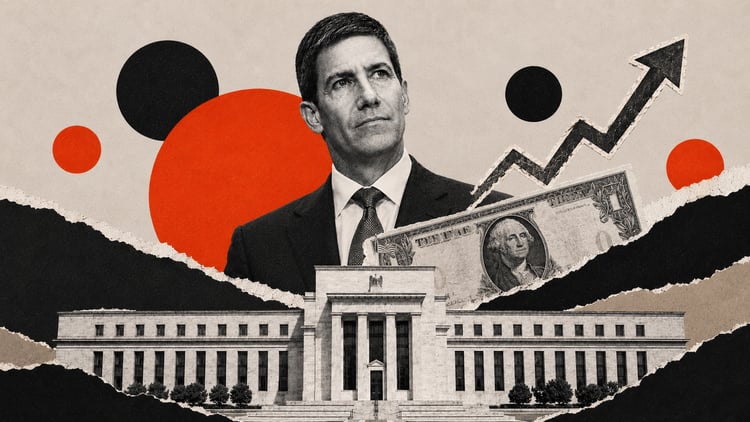
The 0.25% rate rise approved in September is widely expected to be followed by unchanged monetary policy as the Fed assesses its impact. Markets remain quiet ahead of the decision.
Although Chairman Kevin Warsh is unlikely to signal a specific course for interest rates, investors will scrutinise his remarks for signs of the bank’s resolve to return inflation to its target. Such evidence would reinforce hopes of a further rate rise in December.
A backdrop broadly favourable to the Dollar is how ING analysts, including Christ Turner, view current conditions. They say that “a little stability on the AI side has allowed the FX market to re-focus on the clearer and more present danger of higher energy, higher inflation and the central bank response,”
In the ING expert’s view, Chair Warsh is unlikely to “tie himself in knots by citing a tightening in financial conditions, having learnt from the unruly market response to his press conference in July.” The bank nonetheless believes a continued “focus on restoring monetary stability should remain the dominant message and keep the dollar supported.”
October’s ZEW Economic Expectations Index for Switzerland fell to a six-month low of -15-3, down from 2.6 in September, according to the report published earlier in the day. Despite this further deterioration, the Swiss Franc has shown little reaction.
Published by the Centre for European Economic Research, the ZEW Survey Expectations covers business and employment conditions, alongside other factors influencing the day-to-day operation of businesses in Switzerland. A high reading is generally regarded as positive (or bullish) for the CHF; a low reading, by contrast, is considered negative (or bearish).
Find out more.Latest release: Wed 28 Oct 2026 09:00
Release frequency: Monthly
Actual reading: -15.3
Consensus forecast: -
Previous reading: 2.6
Data source: ZEW - Leibniz Centre for European Economic Research
Keeping inflation at 2% and maintaining full employment are the Federal Reserve’s (Fed) two mandates. At eight scheduled meetings each year, it reviews monetary policy and decides on interest rates. Its principal means of meeting these objectives is to set the rates at which it lends to banks and at which banks lend to one another. A rate rise tends to support the US Dollar (USD) by drawing in more foreign capital. Conversely, a rate cut tends to weaken the USD as capital flows towards countries offering higher returns. When rates remain unchanged, the focus shifts to the tone of the Federal Open Market Committee (FOMC) statement: a hawkish stance signals expectations of higher interest rates ahead, while a dovish stance indicates expectations of lower rates.
Find out more.Next scheduled release: Wed 28 Oct 2026 18:00
Release frequency: Irregular
Consensus forecast: 4%
Previous reading: 4%
Data source: Federal Reserve







Phone: +61 2 8036 8388
Fax: +61 2 8036 8388
Email: support@tmgm.com



The information provided on this website is of a general nature only and does not constitute personal financial advice. Before acting on any information on this website, you should consider the suitability of the information in relation to your objectives, financial situation and needs. Investing in CFDs and FX Margin Contracts carries significant risks and is not suitable for all investors. You may lose more than your initial deposit. You do not own, or have, any interest in the underlying asset. We recommend that you seek independent advice and ensure you fully understand the risks involved before trading. It is important that you read and consider the disclosure document before you acquire any product listed on the website. The information and advertisements offered on this website are not intended for use by any person in any country or jurisdiction where such use would be contrary to local laws and regulations. The Products and Services offered on this website are not intended for residents of the United States, Malaysia and Thailand.
TMGM is authorized and regulated in various jurisdictions.
Trademax Australia Limited, trading as TMGM, is regulated by the Australian Securities and Investments Commission (ASIC), AFSL no. 436416 and is located at Level 28, One International Tower, 100 Barangaroo Avenue, 2000 Sydney, NSW Australia.
Email: support@tmgm.com.au
Trademax Global Limited, trading as TMGM, is authorized and regulated by the Vanuatu Financial Services Commission (VFSC), registration number 40356 and registered at 1276, Kumul Highway, Port Vila, Vanuatu, Republic of Vanuatu.
Email: support@tmgm.com
Trademax Global Markets (SE) Limited, trading as TMGM, is authorized and regulated by the Financial Services Authority (FSA) of Seychelles, with license number SD224. The company is registered at Office No 13, Providence Estate ABIS Centre, Mahe, Seychelles.
Email: support@tmgm.com
Trademax Global Markets (International) Pty Ltd, trading as TMGM, is authorized and regulated by the Financial Services Commission, Mauritius (FSC) with license no. GB22201012, and registered at 33, Edith Cavell Street C/o IQ EQ Fund Services (Mauritius) Ltd Port Louis, 11324 Mauritius.
Email: support@tmgm.com
Copyright © TMGM. All rights reserved

