

Сауда
Бәсекеге қабілетті бағалар, жоғары өтімділік және озық сауда құралдары арқылы нарықтардың кең ауқымын зерттеңіз.
Толығырақ 
Платформа
TMGM-нің жылдамдыққа, дәлдікке және жоғары деңгейлі сауда тәжірибесіне арналған қуатты платформасымен сауданы кедергісіз жүргізіңіз.
Толығырақ Сауда платформасы
Академия
Бастауыштарға арналған нұсқаулықтар, вебинарлар және нарық талдаулары сияқты ресурстар арқылы сауданың негіздерін үйреніңіз.
Толығырақ TMGM Академиясы
Жаңалықтар және талдау
Сауда мүмкіндіктерінен алда болу үшін нақты уақыттағы нарық жаңартулары мен сараптамалық талдауды алыңыз
Толығырақ Жаңалықтар және талдау
Туралы
TMGM-ді ерекшелендіретін жайттарды біліңіз — біздің жаһандық ауқымымыз, реттеушілік беріктігіміз және трейдингтегі инновацияларға деген адалдығымыз.
Толығырақ Неліктен TMGM-ді таңдау керек
Chip stocks slide and pull the Nasdaq to a one-week low
- Nasdaq falls to its lowest since November 9, with SPX and DJIA down less.
- Commerce moves to close a loophole that let Chinese firms rent Nvidia chips.
- Nvidia reports third-quarter results after US trading ends on Tuesday.
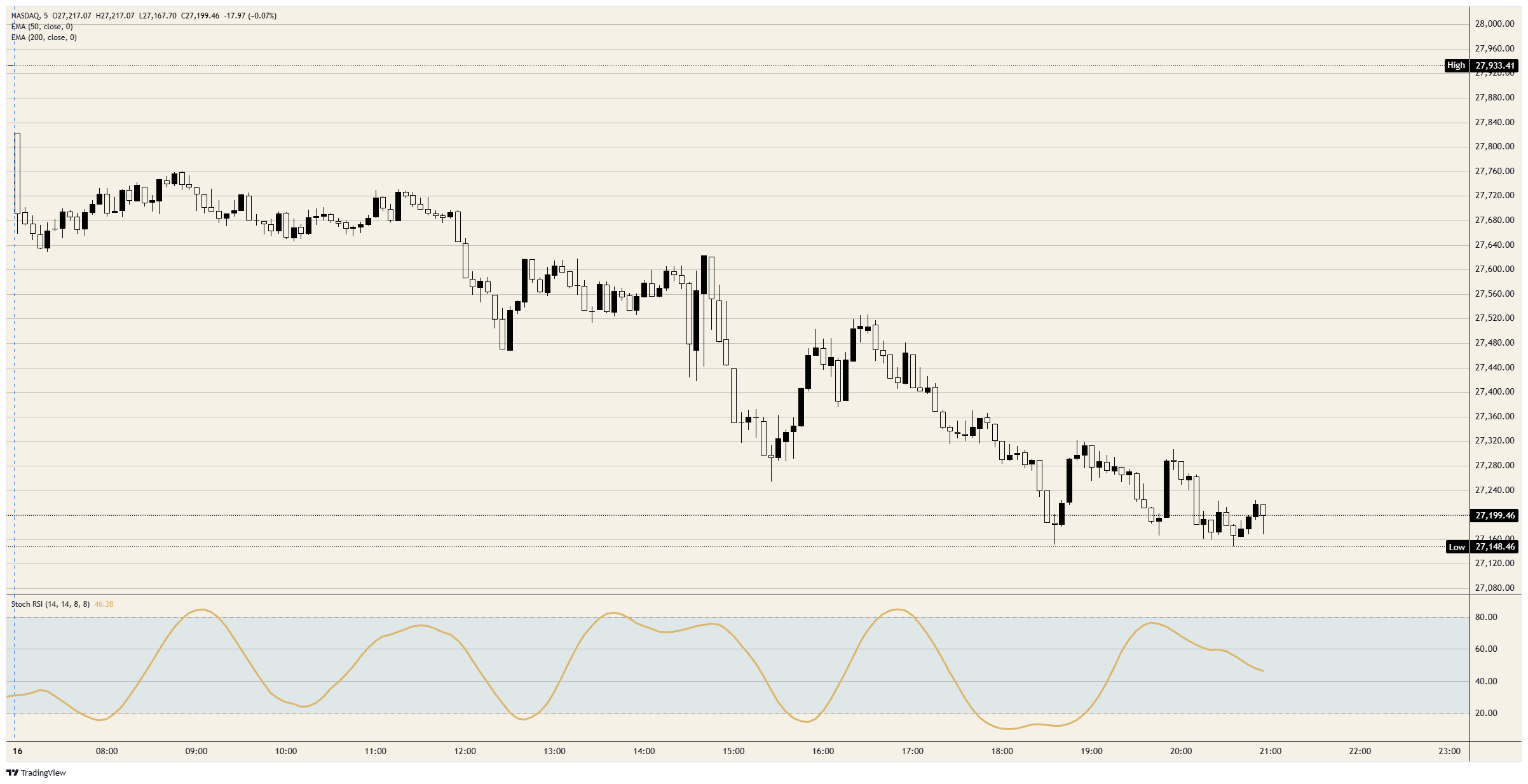
A US export rule aimed at Nvidia (NVDA) and fresh news on its leadership have pushed all three US stock indexes to one-week lows. The Nasdaq 100 has fallen furthest, opening below Friday's close, never trading above that open and dropping to near 27,200, its lowest since November 9. The S&P 500 is near 7,425, and the Dow Jones Industrial Average is near 51,600.

The Commerce Department moved to close a loophole that let Chinese companies rent Nvidia's computing power outside China, the first US policy response since Jensen Huang resigned as chief executive. Nvidia fell about 4%, Micron (MU) and Intel (INTC) more than 7%, and Advanced Micro Devices (AMD) about 5%. Technology stocks make up a larger share of the NASDAQ 100 than of the other two indexes, so it fell the most.
CNBC reported that Nvidia's board isn't discussing bringing Huang back, after Treasury Secretary Bessent urged it to hire from outside the company. The NASDAQ 100 was near 27,350 when the report came out and fell to its session low just below 27,150 afterward. Banks fell too, with Goldman Sachs (GS), Morgan Stanley (MS) and JPMorgan Chase (JPM) each losing more than 2%, which carried the selling into the Dow Jones Industrial Average.
On the calendar
Nvidia reports third-quarter results after US trading ends on Tuesday, its first without Huang as chief executive. Anthropic is due to price its initial public offering on Wednesday at $70-$78 a share and to start trading on the Nasdaq exchange on Thursday. Both test demand for the artificial intelligence (AI) stocks behind Monday's selling.
October retail sales are due at 13:30 GMT on Tuesday. The minutes of the Fed's October 27-28 meeting follow at 19:00 GMT on Wednesday, after a 10-2 vote to hold the rate at 3.75%-4.00%. Traders price a quarter-point hike at the December 8-9 meeting, so the minutes bear mostly on how many officials already wanted one.
On the charts
The NASDAQ 100 has given back about 70% of its rebound from its low near 26,600 and hasn't traded above its 200-day Exponential Moving Average (EMA) near 28,150 since Friday. The S&P 500 is still above its own 200-day EMA near 7,375. The Dow Jones Industrial Average is back below its 50-day EMA near 52,100, after closing above it every session from November 9 to November 13.
Nasdaq 5-minute chart
Nasdaq FAQs
The Nasdaq is a stock exchange based in the US that started out life as an electronic stock quotation machine. At first, the Nasdaq only provided quotations for over-the-counter (OTC) stocks but later it became an exchange too. By 1991, the Nasdaq had grown to account for 46% of the entire US securities’ market. In 1998, it became the first stock exchange in the US to provide online trading. The Nasdaq also produces several indices, the most comprehensive of which is the Nasdaq Composite representing all 2,500-plus stocks on the Nasdaq, and the Nasdaq 100.
The Nasdaq 100 is a large-cap index made up of 100 non-financial companies from the Nasdaq stock exchange. Although it only includes a fraction of the thousands of stocks in the Nasdaq, it accounts for over 90% of the movement. The influence of each company on the index is market-cap weighted. The Nasdaq 100 includes companies with a significant focus on technology although it also encompasses companies from other industries and from outside the US. The average annual return of the Nasdaq 100 has been 17.23% since 1986.
There are a number of ways to trade the Nasdaq 100. Most retail brokers and spread betting platforms offer bets using Contracts for Difference (CFD). For longer-term investors, Exchange-Traded Funds (ETFs) trade like shares that mimic the movement of the index without the investor needing to buy all 100 constituent companies. An example ETF is the Invesco QQQ Trust (QQQ). Nasdaq 100 futures contracts allow traders to speculate on the future direction of the index. Options provide the right, but not the obligation, to buy or sell the Nasdaq 100 at a specific price (strike price) in the future.
Many different factors drive the Nasdaq 100 but mainly it is the aggregate performance of the component companies revealed in their quarterly and annual company earnings reports. US and global macroeconomic data also contributes as it impacts on investor sentiment, which if positive drives gains. The level of interest rates, set by the Federal Reserve (Fed), also influences the Nasdaq 100 as it affects the cost of credit, on which many corporations are heavily reliant. As such the level of inflation can be a major driver too as well as other metrics which impact on the decisions of the Fed.
Үздік мақалалар
1Қытайдың сауда профициті қазанда қысқарған тұста австралиялық доллар әлсіз күйде қалды.2Қытайдың сауда профициті қазанда күтілгеннен де көп қысқарып, CNY 712,72 млрд болды.3АҚШ долларының индексі (DXY) 101,70 маңында өзгеріссіз қалып, Иранға қатысты белгісіздік аясында АҚШ-тың CPI есебін күтуде4Қытай экспорты қазанда жылдық мәнде 35,2%-ға өсіп, 33,5% болған болжамнан асып түсті.5Қытай импортының жылдық өсімі қазанда күтілгеннен жоғары болды (32%): нақты көрсеткіш — 41,6%6Қытайдың сауда балансы қазан айында $105.28B болды, бұл күтілген $125.8B көрсеткішінен төмен.7Қытайдың қазан айындағы сауда балансының көрсеткіші 712,78 млрд юань болды, бұл 859 млрд юаньдық болжамнан төмен.8Қытай экспорты (ж/ж), CNY: қазанда алдыңғы 29,6%-дан 28,7%-ға дейін төмендеді.9Иранмен келіссөздер NZD/USD бағамын көтере алмаған соң, Жаңа Зеландия доллары тұрақтанды.


Бастау!
Тіркеліп, 3 минуттан аз уақытта жаһандық нарықтарға қол жеткізіңіз

Бізбен байланысыңыз









Байланыстар
Телефон: +61 2 8036 8388
Факс: +61 2 8036 8388
Эл. пошта: support@tmgm.com



Осы веб-сайтта берілген ақпарат тек жалпы сипатта ғана ұсынылады және жеке қаржылық кеңес болып табылмайды. Осы веб-сайттағы кез келген ақпаратқа сүйенбес бұрын, оның сіздің мақсаттарыңызға, қаржылық жағдайыңызға және қажеттіліктеріңізге сәйкестігін бағалауыңыз керек. CFD және FX Margin Contracts-қа инвестиция салу елеулі тәуекелдермен байланысты және барлық инвесторлар үшін қолайлы емес. Сіз бастапқы салымыңыздан артық қаражат жоғалтуыңыз мүмкін. Сіз базалық активке ешқандай меншік құқығына немесе үлеске ие болмайсыз. Сауда жасамас бұрын тәуелсіз кеңес алуды және тәуекелдерді толық түсінуді ұсынамыз. Веб-сайтта көрсетілген кез келген өнімді сатып алмас бұрын, ақпараттық құжатты оқып, оны мұқият қарастыру маңызды. Осы веб-сайтта ұсынылған ақпарат пен жарнамалар жергілікті заңдар мен ережелерге қайшы келетін кез келген елде немесе юрисдикцияда тұратын адамдардың пайдалануына арналмаған. Осы веб-сайтта ұсынылатын Өнімдер мен Қызметтер Америка Құрама Штаттары, Малайзия және Таиланд тұрғындарына арналмаған.
TMGM әртүрлі юрисдикцияларда уәкілетті және реттеледі.
Trademax Australia Limited, TMGM атауымен жұмыс істейді, Австралияның Бағалы қағаздар және инвестициялар жөніндегі комиссиясымен (ASIC) реттеледі, AFSL № 436416 және мына мекенжайда орналасқан: Level 28, One International Tower, 100 Barangaroo Avenue, 2000 Sydney, NSW Australia.
Электрондық пошта: support@tmgm.com.au
Trademax Global Limited, TMGM атауымен жұмыс істейді, Вануату Қаржылық қызметтер комиссиясымен (VFSC) уәкілетті және реттеледі, тіркеу нөмірі 40356, тіркелген мекенжайы: 1276, Kumul Highway, Port Vila, Vanuatu, Republic of Vanuatu.
Электрондық пошта: support@tmgm.com
Trademax Global Markets (SE) Limited, TMGM атауымен жұмыс істейді, Сейшел аралдарының Қаржылық қызметтер басқармасы (FSA) тарапынан уәкілетті және реттеледі, лицензия нөмірі SD224. Компания мына мекенжайда тіркелген: Office No 13, Providence Estate ABIS Centre, Mahe, Seychelles.
Электрондық пошта: support@tmgm.com
Trademax Global Markets (International) Pty Ltd, TMGM атауымен жұмыс істейді, Mauritius Қаржылық қызметтер комиссиясымен (FSC) № GB22201012 лицензиясы бойынша уәкілетті және реттеледі, тіркелген мекенжайы: 33, Edith Cavell Street C/o IQ EQ Fund Services (Mauritius) Ltd Port Louis, 11324 Mauritius.
Электрондық пошта: support@tmgm.com
Авторлық құқық © TMGM. Барлық құқықтар қорғалған