

Сауда
Бәсекеге қабілетті бағалар, жоғары өтімділік және озық сауда құралдары арқылы нарықтардың кең ауқымын зерттеңіз.
Толығырақ 
Платформа
TMGM-нің жылдамдыққа, дәлдікке және жоғары деңгейлі сауда тәжірибесіне арналған қуатты платформасымен сауданы кедергісіз жүргізіңіз.
Толығырақ Сауда платформасы
Академия
Бастауыштарға арналған нұсқаулықтар, вебинарлар және нарық талдаулары сияқты ресурстар арқылы сауданың негіздерін үйреніңіз.
Толығырақ TMGM Академиясы
Жаңалықтар және талдау
Сауда мүмкіндіктерінен алда болу үшін нақты уақыттағы нарық жаңартулары мен сараптамалық талдауды алыңыз
Толығырақ Жаңалықтар және талдау
Туралы
TMGM-ді ерекшелендіретін жайттарды біліңіз — біздің жаһандық ауқымымыз, реттеушілік беріктігіміз және трейдингтегі инновацияларға деген адалдығымыз.
Толығырақ Неліктен TMGM-ді таңдау керек
UK retail sales are next for a Pound at a new 2026 low
- GBP/USD breaks its October low and drops under 1.3100, a new low for 2026.
- US stocks fall 2%, and foreign buying of the Anthropic IPO adds Dollar demand.
- UK retail sales for October are due Friday, after GfK consumer confidence.
No UK release was needed to push the Pound to a new 2026 low; a 2% fall in US stocks and heavy Dollar buying did it. GBP/USD fell to its October 14 low just under 1.3150, where Wednesday's drop stopped, and is now trading just under 1.3100. It has had no bounce: the session's low and the latest price are the same.
Spectra Markets President Brent Donnelly estimates that foreign investors took $10 billion-$15 billion of Anthropic's initial public offering (IPO), which they pay for in Dollars. He says those buyers are competing with companies that want their own Dollar purchases done before Thanksgiving, and with funds that rebalance as stocks fall. All three sell Pounds for Dollars, and none of them depends on UK data.
Bank of England (BoE) Monetary Policy Committee member Greene said on Thursday that the bigger risk is doing too little on inflation, and that policy hasn't been as tight as the BoE thought. That's an argument for raising the UK's Bank Rate again from 4.00%, and it didn't lift the Pound off its low. The BoE raised the rate on November 5 by 8-1, with the one dissent in favour of a half-point move.
On the calendar
GfK's consumer confidence index for November is due at 00:01 GMT on Friday, forecast at -22 after -24. October retail sales follow at 07:00 GMT, forecast flat on the month after a 0.4% fall and up 1.7% YoY after 0.8%, with sales excluding fuel forecast down 0.1%. Both feed the BoE's December 17 decision, where a second hike became less certain after Wednesday's inflation figures.
Fed Governor Waller speaks at 13:25 GMT on Friday, two days after repeating his call for a half-point hike in December. A quarter-point Fed hike on December 9 would be enough to put US rates above the UK's.
On the charts
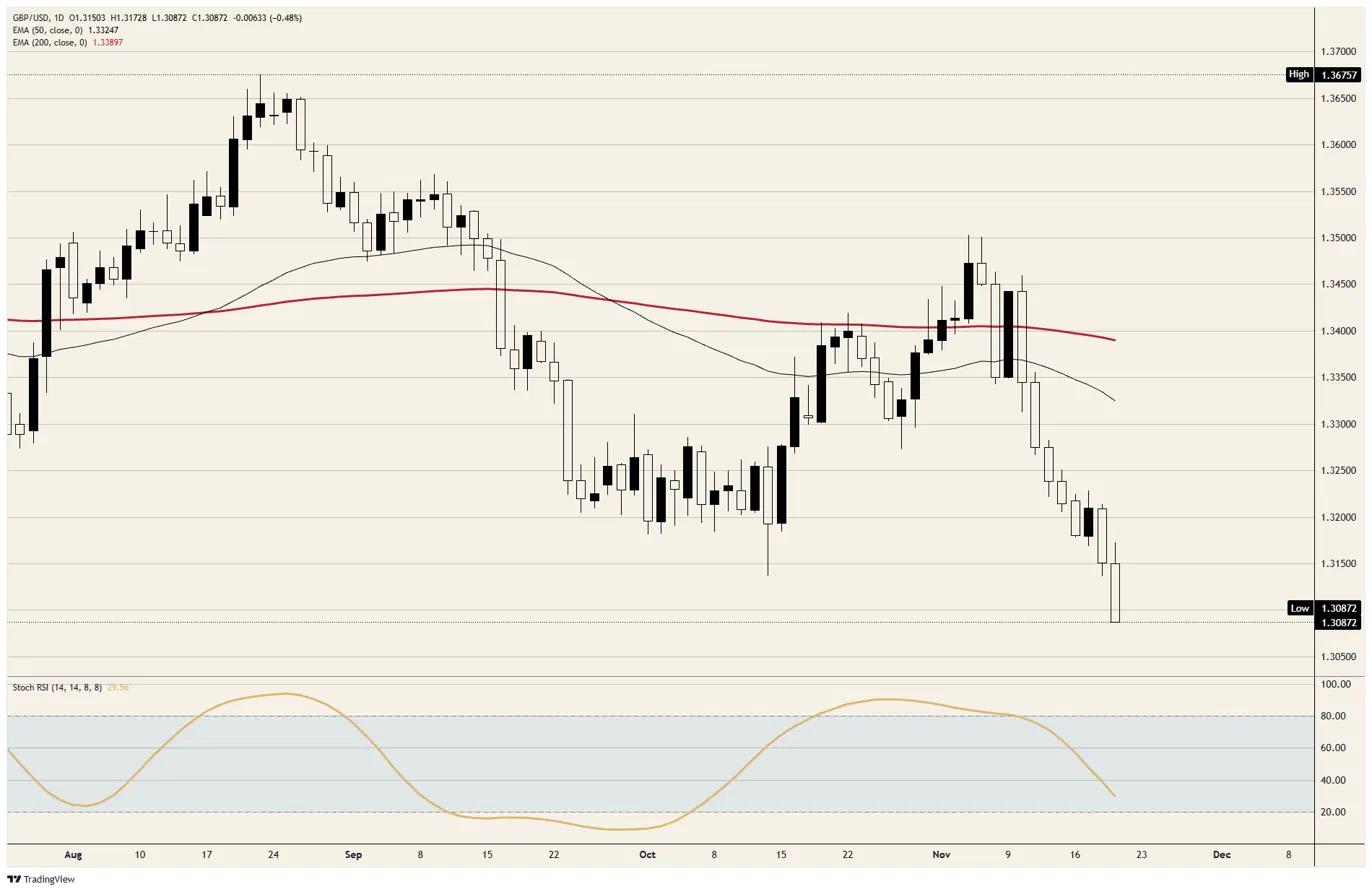
The Pound has dropped about 400 pips in eleven sessions from its November 4 high near 1.3500, and it's now below every daily low since at least late July. The 50-day Exponential Moving Average (EMA) just above 1.3300 and the 200-day just under 1.3400 are both above it, and the 50-day has been under the 200-day since late September.
GBP/USD daily chart
Pound Sterling FAQs
The Pound Sterling (GBP) is the oldest currency in the world (886 AD) and the official currency of the United Kingdom. It is the fourth most traded unit for foreign exchange (FX) in the world, accounting for 12% of all transactions, averaging $630 billion a day, according to 2022 data. Its key trading pairs are GBP/USD, also known as ‘Cable’, which accounts for 11% of FX, GBP/JPY, or the ‘Dragon’ as it is known by traders (3%), and EUR/GBP (2%). The Pound Sterling is issued by the Bank of England (BoE).
The single most important factor influencing the value of the Pound Sterling is monetary policy decided by the Bank of England. The BoE bases its decisions on whether it has achieved its primary goal of “price stability” – a steady inflation rate of around 2%. Its primary tool for achieving this is the adjustment of interest rates. When inflation is too high, the BoE will try to rein it in by raising interest rates, making it more expensive for people and businesses to access credit. This is generally positive for GBP, as higher interest rates make the UK a more attractive place for global investors to park their money. When inflation falls too low it is a sign economic growth is slowing. In this scenario, the BoE will consider lowering interest rates to cheapen credit so businesses will borrow more to invest in growth-generating projects.
Data releases gauge the health of the economy and can impact the value of the Pound Sterling. Indicators such as GDP, Manufacturing and Services PMIs, and employment can all influence the direction of the GBP. A strong economy is good for Sterling. Not only does it attract more foreign investment but it may encourage the BoE to put up interest rates, which will directly strengthen GBP. Otherwise, if economic data is weak, the Pound Sterling is likely to fall.
Another significant data release for the Pound Sterling is the Trade Balance. This indicator measures the difference between what a country earns from its exports and what it spends on imports over a given period. If a country produces highly sought-after exports, its currency will benefit purely from the extra demand created from foreign buyers seeking to purchase these goods. Therefore, a positive net Trade Balance strengthens a currency and vice versa for a negative balance.
Үздік мақалалар
1Bitcoin 62 000 доллардан төмен түсті, ал Anthropic IPO-сынан кейін жасанды интеллект токендері нарықтан озық нәтиже көрсетуде2Иена бағамы қайтадан 160,00 деңгейіне жақындаған тұста Жапонияның қазан айындағы тұтыну бағалары индексі жарияланбақ3АҚШ-тың әлсіз деректері доллардың нығаюын тежей алмады, еуро 1,10 деңгейінен төмен қалып отыр4Anthropic компаниясының IPO-сы басты назарда болған тұста Dow Jones Industrial Average индексі 1 000 тармақтан астам төмендеді5Ethereum бағасына болжам: Anthropic таныстырылған тұста ETH $1 800 деңгейінен төмен қалып отыр6Индонезия рупиясы: Индонезия банкі қатаң ұстанымға көшкендіктен, ақша-кредит саясатының одан әрі қатаю қаупі бар – Commerzbank7Бүгінгі валюта нарығы: Жапонияның тұтыну бағалары индексі мен Ұлыбританияның тұтынушылық шығындары туралы деректер нарықтың бағытын айқындайды8Мұнай бағасының қайта көтерілуі аясында Канада доллары нығаюда, бірақ ФРЖ-ның қатаң ұстанымы өсімді шектеп отыр9Еңбек нарығындағы күтпеген деректер Австралия резервтік банкінің саясатын қайта қарауға түрткі болып, Австралия доллары жыл басынан бергі жаңа ең төменгі деңгейге дейін құлдырады

Бастау!
Тіркеліп, 3 минуттан аз уақытта жаһандық нарықтарға қол жеткізіңіз

Бізбен байланысыңыз









Байланыстар
Телефон: +61 2 8036 8388
Факс: +61 2 8036 8388
Эл. пошта: support@tmgm.com



Осы веб-сайтта берілген ақпарат тек жалпы сипатта ғана ұсынылады және жеке қаржылық кеңес болып табылмайды. Осы веб-сайттағы кез келген ақпаратқа сүйенбес бұрын, оның сіздің мақсаттарыңызға, қаржылық жағдайыңызға және қажеттіліктеріңізге сәйкестігін бағалауыңыз керек. CFD және FX Margin Contracts-қа инвестиция салу елеулі тәуекелдермен байланысты және барлық инвесторлар үшін қолайлы емес. Сіз бастапқы салымыңыздан артық қаражат жоғалтуыңыз мүмкін. Сіз базалық активке ешқандай меншік құқығына немесе үлеске ие болмайсыз. Сауда жасамас бұрын тәуелсіз кеңес алуды және тәуекелдерді толық түсінуді ұсынамыз. Веб-сайтта көрсетілген кез келген өнімді сатып алмас бұрын, ақпараттық құжатты оқып, оны мұқият қарастыру маңызды. Осы веб-сайтта ұсынылған ақпарат пен жарнамалар жергілікті заңдар мен ережелерге қайшы келетін кез келген елде немесе юрисдикцияда тұратын адамдардың пайдалануына арналмаған. Осы веб-сайтта ұсынылатын Өнімдер мен Қызметтер Америка Құрама Штаттары, Малайзия және Таиланд тұрғындарына арналмаған.
TMGM әртүрлі юрисдикцияларда уәкілетті және реттеледі.
Trademax Australia Limited, TMGM атауымен жұмыс істейді, Австралияның Бағалы қағаздар және инвестициялар жөніндегі комиссиясымен (ASIC) реттеледі, AFSL № 436416 және мына мекенжайда орналасқан: Level 28, One International Tower, 100 Barangaroo Avenue, 2000 Sydney, NSW Australia.
Электрондық пошта: support@tmgm.com.au
Trademax Global Limited, TMGM атауымен жұмыс істейді, Вануату Қаржылық қызметтер комиссиясымен (VFSC) уәкілетті және реттеледі, тіркеу нөмірі 40356, тіркелген мекенжайы: 1276, Kumul Highway, Port Vila, Vanuatu, Republic of Vanuatu.
Электрондық пошта: support@tmgm.com
Trademax Global Markets (SE) Limited, TMGM атауымен жұмыс істейді, Сейшел аралдарының Қаржылық қызметтер басқармасы (FSA) тарапынан уәкілетті және реттеледі, лицензия нөмірі SD224. Компания мына мекенжайда тіркелген: Office No 13, Providence Estate ABIS Centre, Mahe, Seychelles.
Электрондық пошта: support@tmgm.com
Trademax Global Markets (International) Pty Ltd, TMGM атауымен жұмыс істейді, Mauritius Қаржылық қызметтер комиссиясымен (FSC) № GB22201012 лицензиясы бойынша уәкілетті және реттеледі, тіркелген мекенжайы: 33, Edith Cavell Street C/o IQ EQ Fund Services (Mauritius) Ltd Port Louis, 11324 Mauritius.
Электрондық пошта: support@tmgm.com
Авторлық құқық © TMGM. Барлық құқықтар қорғалған