

Торговля
Изучите широкий спектр рынков с конкурентными ценами, высокой ликвидностью и передовыми торговыми инструментами.
Узнать больше 
Платформа
Торгуйте без сбоев на мощной платформе TMGM, созданной для скорости, точности и превосходного торгового опыта.
Узнать больше Торговая платформа
Торговые инструменты
Академия
Изучите основы торговли с помощью материалов для начинающих, включая руководства, вебинары и аналитические обзоры рынка.
Узнать больше Новости и аналитика
Получайте актуальные рыночные обновления и экспертную аналитику, чтобы быть на шаг впереди торговых возможностей
Узнать больше Новости и аналитика
О нас
Узнайте, что отличает TMGM — наше глобальное присутствие, надежное регулирование и приверженность инновациям в трейдинге.
Узнать больше Почему выбирают TMGM
Спонсорство
Forex Today: BoJ keeps policy settings unchanged, Gold drops below $4,000
Here is what you need to know on Friday, October 30:
Markets experience some heightened volatility early Friday as investors assess latest central bank decisions, macroeconomic data releases, while keeping a close eye on the action in US stock index futures. Later in the session, preliminary October inflation data from Germany, third-quarter Gross Domestic Product (GDP) readings from the Eurozone and third-quarter Employment Cost Index data from the US will be featured in the economic calendar. Moreover, policymakers from the European Central Bank (ECB) and the Federal Reserve (Fed) are scheduled to deliver speeches.
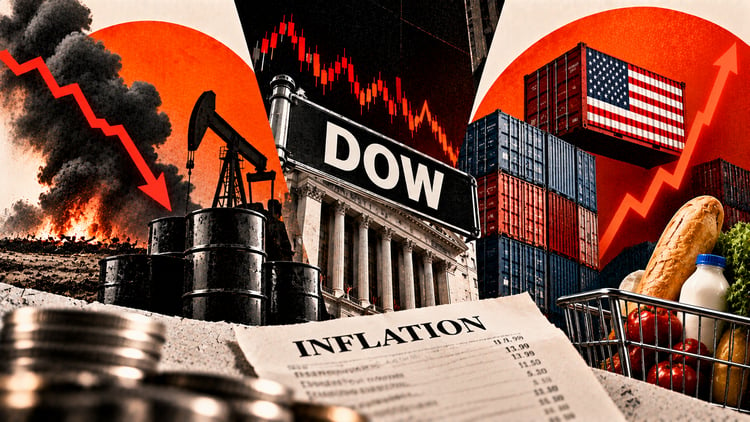
The ECB left its key rates unchanged following the October meeting on Thursday, as largely anticipated. During the press conference, ECB President Christine Lagarde said that the Governing Council debated whether a rate hike was appropriate, adding that the headline inflation is expected to remain "well above target" in coming quarters. After falling toward 1.1100, EUR/USD reversed its direction on Lagarde's hawkish tone and closed in positive territory above 1.1150 on Thursday. The pair holds its ground in the European morning on Friday but struggles to clear 1.1200 as the souring risk mood caps the upside.
Euro outlook hinges on ECB path beyond December
Analysts at Commerzbank note that the ECB “delivered the largely expected pause” at yesterday’s meeting, but stress that policy remains far from on autopilot. According to the bank, ECB President Christine Lagarde “made it clear that, in light of higher energy prices, the Governing Council had indeed discussed another rate hike” and “left the door open to a third rate increase this year in December.”
For the Euro, Commerzbank argues that “the more important question is likely to be what happens after December,” with the currency’s trajectory set to be driven less by the next meeting and more by the broader inflation backdrop. In their view, “much will depend on energy-price developments,” which will be crucial in shaping expectations for the ECB’s policy path.
Meanwhile, the data from the United States (US) showed that the Gross Domestic Product (GDP) grew at an annual rate of 3.4% in the third quarter, surpassing the market expectation for an increase of 3.2%. Additionally, the core Personal Consumption Expenditures (PCE) Price Index, the Fed's preferred gauge of inflation, increased by 3.1% on a yearly basis in September to match analysts' estimate.
Google parent Alphabet shares plunged more than 10% on Thursday and touched its weakest since April after the company noted that artificial intelligence summaries on search were hurting the ad revenue. Moreover, the company reported a negative free cash flow of about $9 billion. In the European morning on Friday, Nasdaq Futures are down about 2% on the day, the US Dollar Index stays flat near 101.80, while the benchmark 10-year US Treasury bond yield remains virtually unchanged on the day below 5% after falling more than 1% on Thursday.
During the Asian trading hours, the Bank of Japan (BoJ) announced that they left the short-term interest rate unchanged at 1.25% following the conclusion of its two-day monetary policy review meeting. In the post-meeting press conference, BoJ Governor Kazuo Ueda repeated that they will continue to raise the policy rate and adjust the degree of monetary easing in response to the economic activity, prices and financial condition developments. After falling toward 157.00, USD/JPY regained its traction and was last seen trading virtually unchanged at 157.55.
FXS Speechtracker scored Ueda's comments at 7.2/10, slightly below the historic 7.7/10 baseline, and signaling a mildly less confident tone despite clear acknowledgement that underlying CPI inflation is now broadly consistent with the 2% target. The commitment to continue raising the policy rate and to adjust the degree of monetary easing as economic activity, prices and financial conditions evolve marked a modestly hawkish tilt, tempered by repeated emphasis on accommodative financial conditions and government support for growth.
After posting marginal gains for three consecutive days, Gold came under heavy bearish pressure on Thursday and lost more than 1%. The precious metal continues to push lower and was last seen trading near $3,980, down about 1% on the day.
Gold rebound stalls as OCBC flags limited fresh buying and risk of renewed lows
Strategists at OCBC note that gold’s recent recovery has "despite some easing in US Treasury yields and oil prices.” They highlight that “more notably, Gold’s inability to benefit from lower yields suggests that fresh buying interest remains limited, even as earlier liquidation pressures may be easing.” OCBC adds that “renewed weakness in technology equities also weighed on sentiment as it raises concerns over another bout of broader deleveraging.” Against this backdrop, the bank says, “we remain cautious near term, with further consolidation or another test of recent lows not ruled out,” stressing that Friday’s Employment Cost Index and “the direction of equities, yields and USD will be important to watch.”
GBP/USD holds its ground and trades in positive territory near 1.3400 after gaining about 0.4% on Thursday.
Risk sentiment FAQs
In the world of financial jargon the two widely used terms “risk-on” and “risk off'' refer to the level of risk that investors are willing to stomach during the period referenced. In a “risk-on” market, investors are optimistic about the future and more willing to buy risky assets. In a “risk-off” market investors start to ‘play it safe’ because they are worried about the future, and therefore buy less risky assets that are more certain of bringing a return, even if it is relatively modest.
Typically, during periods of “risk-on”, stock markets will rise, most commodities – except Gold – will also gain in value, since they benefit from a positive growth outlook. The currencies of nations that are heavy commodity exporters strengthen because of increased demand, and Cryptocurrencies rise. In a “risk-off” market, Bonds go up – especially major government Bonds – Gold shines, and safe-haven currencies such as the Japanese Yen, Swiss Franc and US Dollar all benefit.
The Australian Dollar (AUD), the Canadian Dollar (CAD), the New Zealand Dollar (NZD) and minor FX like the Ruble (RUB) and the South African Rand (ZAR), all tend to rise in markets that are “risk-on”. This is because the economies of these currencies are heavily reliant on commodity exports for growth, and commodities tend to rise in price during risk-on periods. This is because investors foresee greater demand for raw materials in the future due to heightened economic activity.
The major currencies that tend to rise during periods of “risk-off” are the US Dollar (USD), the Japanese Yen (JPY) and the Swiss Franc (CHF). The US Dollar, because it is the world’s reserve currency, and because in times of crisis investors buy US government debt, which is seen as safe because the largest economy in the world is unlikely to default. The Yen, from increased demand for Japanese government bonds, because a high proportion are held by domestic investors who are unlikely to dump them – even in a crisis. The Swiss Franc, because strict Swiss banking laws offer investors enhanced capital protection.
Лучшие статьи
1Oil: War risks keep prices elevated – Rabobank2US Dollar Index Price Forecast: DXY struggles near 101.75 amid falling bond yields 3British Pound tests six-week highs as traders brace for BoE tightening4Germany’s flash Q3 GDP growth remains 0.2%, beats 0.1% estimates5British Pound: Upward momentum building against US Dollar – UOB6Ripple wins US banking approval: A turning point for the crypto sector?7Japanese Yen: Inflation risks support steady BoJ hikes – TD Securities8Euro retreats from day’s high as US Dollar rebounds, German HICP data awaited9GBP/JPY Price Forecast: Advances above 211.00, over one-week as JPY softens after BoJ


Начать!
Зарегистрируйтесь и получите доступ к глобальным рынкам менее чем за 3 минуты

Свяжитесь с нами









Контакты
Телефон: +61 2 8036 8388
Факс: +61 2 8036 8388
Эл. почта: support@tmgm.com
Веб-сайт: https://www.tmgmasia.com



Информация, представленная на этом веб-сайте, носит исключительно общий характер и не является персональной финансовой консультацией. Прежде чем действовать на основании любой информации на этом веб-сайте, вам следует оценить ее уместность с учетом ваших целей, финансового положения и потребностей. Инвестирование в CFD и маржинальные контракты на FX сопряжено со значительными рисками и подходит не всем инвесторам. Вы можете потерять больше, чем ваш первоначальный депозит. Вы не владеете базовым активом и не имеете в нем какой-либо доли. Мы рекомендуем вам обратиться за независимой консультацией и убедиться, что вы полностью понимаете связанные с этим риски, прежде чем начинать торговлю. Важно прочитать и принять во внимание документ с раскрытием информации, прежде чем приобретать любой продукт, указанный на веб-сайте. Информация и рекламные материалы, предлагаемые на этом веб-сайте, не предназначены для использования любым лицом в любой стране или юрисдикции, где такое использование противоречило бы местным законам и нормативным актам. Продукты и услуги, предлагаемые на этом веб-сайте, не предназначены для резидентов США, Малайзии и Таиланда.
TMGM уполномочена и регулируется в различных юрисдикциях.
Trademax Australia Limited, работающая под брендом TMGM, регулируется Australian Securities and Investments Commission (ASIC), AFSL № 436416 и находится по адресу: Level 28, One International Tower, 100 Barangaroo Avenue, 2000 Sydney, NSW Australia.
Email: support@tmgm.com.au
Trademax Global Limited, работающая под брендом TMGM, уполномочена и регулируется Vanuatu Financial Services Commission (VFSC), регистрационный номер 40356, и зарегистрирована по адресу: 1276, Kumul Highway, Port Vila, Vanuatu, Republic of Vanuatu.
Email: support@tmgm.com
Trademax Global Markets (SE) Limited, работающая под брендом TMGM, уполномочена и регулируется Financial Services Authority (FSA) Сейшельских Островов, номер лицензии SD224. Компания зарегистрирована по адресу: Office No 13, Providence Estate ABIS Centre, Mahe, Seychelles.
Email: support@tmgm.com
Trademax Global Markets (International) Pty Ltd, работающая под брендом TMGM, уполномочена и регулируется Financial Services Commission, Mauritius (FSC), лицензия № GB22201012, и зарегистрирована по адресу: 33, Edith Cavell Street C/o IQ EQ Fund Services (Mauritius) Ltd Port Louis, 11324 Mauritius.
Email: support@tmgm.com
Авторское право © TMGM. Все права защищены