

Savdo
Raqobatbardosh narxlar, chuqur likvidlik va ilg‘or savdo vositalari bilan keng turdagi bozorlarni kashf eting.
Batafsil ma’lumot 
Platforma
TMGM’ning tezlik, aniqlik va yuqori savdo tajribasi uchun yaratilgan kuchli platformasi bilan uzluksiz savdo qiling.
Batafsil ma’lumot Savdo platformasi
Savdo vositalari
Akademiya
Boshlovchilar uchun qulay resurslar, jumladan qo‘llanmalar, vebinarlar va bozor tahlillari orqali savdoning asoslarini o‘rganing.
Batafsil ma’lumot Yangiliklar va tahlil
Savdo imkoniyatlaridan oldinda bo‘lish uchun bozor yangilanishlari va ekspert tahlillarini real vaqt rejimida oling
Batafsil ma’lumot Yangiliklar va tahlil
Haqida
TMGMni boshqalardan ajratib turadigan jihatlarni bilib oling — bizning global mavjudligimiz, tartibga solishdagi mustahkamligimiz va savdoda innovatsiyalarga sodiqligimiz.
Batafsil ma’lumot Nega TMGMni tanlash kerak
BoJ’s Ueda plans to continue raising rates as monetary conditions remain accommodative
Bank of Japan (BoJ) Governor Kazuo Ueda said on Thursday that underlying inflation roughly aligns with the price target. He added that the central bank plans to continue raising interest rates as monetary conditions remain accommodative.
Key quotes
Japan's economy steady but showing some fragility.
Underlying inflation roughly aligns with price target.
Risk inflation could exceed central bank's target.
Plans to continue raising interest rates as monetary conditions remain accommodative.
Crucial to anchor core inflation near 2% to prevent risk of inflation overshoot.
Simulations indicate accelerated ETF sales won’t severely impact BoJ finances.
Rate hikes raise firms' funding costs but strong corporate earnings and rising wages also factor in economic impact.
Real interest rates stay low in short-term zones despite previous hikes with biggest effect on economy.
Financial conditions stay loose, backing economic activity.
Will closely examine impact of rate hikes on corporate and household activity.
July-September consumption decline in GDP data matches expectations.
Consumption steady overall as wages grow steadily amid tight labor market.
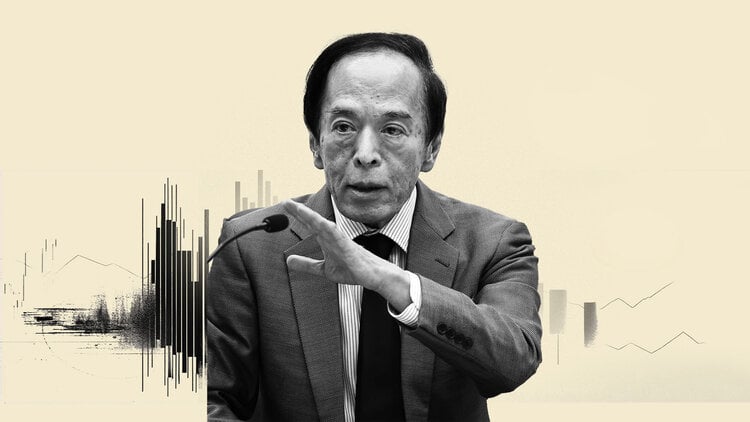
Ueda flags inflation overshoot risks as BoJ leans toward further tightening
FXS Speechtracker shows this Ueda speech at 8.2 versus a historic 7.6, signaling a more hawkish tilt than usual as the Governor highlights risks that inflation could exceed the price target and underscores plans to continue raising rates while conditions remain accommodative. Emphasis on anchoring core inflation near 2% and the assessment that accelerated ETF sales will not severely impact BoJ finances reinforces confidence in policy normalization and reduces perceived balance-sheet constraints.
Acknowledgment that rate hikes raise funding costs but are cushioned by strong corporate earnings, rising wages, and still-loose financial conditions suggests the BoJ sees room to tighten without derailing growth, even as Japan’s economy is described as steady but fragile. The view that consumption weakness in July-September is in line with expectations and that spending is broadly supported by wage gains amid a tight labor market backs a mildly positive macro backdrop for the YEN, consistent with gradual policy tightening and a bias toward further rate increases.
Market reaction
At the time of writing, the USD/JPY pair is up 0.03% on the day at 159.35.
Bank of Japan FAQs
The Bank of Japan (BoJ) is the Japanese central bank, which sets monetary policy in the country. Its mandate is to issue banknotes and carry out currency and monetary control to ensure price stability, which means an inflation target of around 2%.
The Bank of Japan embarked in an ultra-loose monetary policy in 2013 in order to stimulate the economy and fuel inflation amid a low-inflationary environment. The bank’s policy is based on Quantitative and Qualitative Easing (QQE), or printing notes to buy assets such as government or corporate bonds to provide liquidity. In 2016, the bank doubled down on its strategy and further loosened policy by first introducing negative interest rates and then directly controlling the yield of its 10-year government bonds. In March 2024, the BoJ lifted interest rates, effectively retreating from the ultra-loose monetary policy stance.
The Bank’s massive stimulus caused the Yen to depreciate against its main currency peers. This process exacerbated in 2022 and 2023 due to an increasing policy divergence between the Bank of Japan and other main central banks, which opted to increase interest rates sharply to fight decades-high levels of inflation. The BoJ’s policy led to a widening differential with other currencies, dragging down the value of the Yen. This trend partly reversed in 2024, when the BoJ decided to abandon its ultra-loose policy stance.
A weaker Yen and the spike in global energy prices led to an increase in Japanese inflation, which exceeded the BoJ’s 2% target. The prospect of rising salaries in the country – a key element fuelling inflation – also contributed to the move.
Eng yaxshi maqolalar
1Mehnat bozoriga oid zaif maʼlumotlar eʼlon qilingach, Avstraliya dollari Yaponiya iyenasiga nisbatan pasaydi2Yaqin Sharqda keskinlik kuchayishi fonida WTI narxi tiklanib, 82,00 dollardan yuqoriga koʻtarildi3Fedning qatʼiy pul-kredit siyosatiga oid signallari fonida AQSh dollari barqaror qolmoqda, yevro kursi esa deyarli oʻzgarmayapti4Ishsizlik darajasi soʻnggi besh yildagi eng yuqori koʻrsatkichga sakrashi ortidan Avstraliya dollari 0,6700 dan pastga tushdi5UKMTO: Ummonning Xasab shahri yaqinida tankerga snaryad kelib tushdi6Fedning qatʼiy bayonotlari fonida oltin narxi 3 750 dollardan pastga tushib, soʻnggi 14 oylik eng quyi darajaga yetdi7Yaponiyada inflyatsiya maʼlumotlari eʼlon qilinishi arafasida iyena 160,00 darajasidan pastda barqaror turibdi8Fed vakili Kashkari: Bozorlar markaziy bank foiz stavkalarini rasmiylar hozir kutayotganidan koʻproq oshirishga majbur boʻladi, deb hisoblamoqda9Toʻrt oylik eng past darajaga tushgan Avstraliya dollari endi bandlik maʼlumotlarini kutmoqda


Boshlang!
Ro‘yxatdan o‘ting va 3 daqiqadan kamroq vaqt ichida Global bozorlariga kirish imkoniga ega bo‘ling

Biz bilan bog‘laning









Kontaktlar
Telefon: +61 2 8036 8388
Faks: +61 2 8036 8388
Email: support@tmgm.com



Ushbu veb-saytda taqdim etilgan ma’lumotlar faqat umumiy xususiyatga ega bo‘lib, shaxsiy moliyaviy maslahat hisoblanmaydi. Ushbu veb-saytdagi har qanday ma’lumot asosida harakat qilishdan oldin, ma’lumotning sizning maqsadlaringiz, moliyaviy ahvolingiz va ehtiyojlaringizga mosligini ko‘rib chiqishingiz kerak. CFD va FX Margin shartnomalariga sarmoya kiritish sezilarli xavflarni o‘z ichiga oladi va barcha investorlar uchun mos emas. Siz boshlang‘ich depozitingizdan ko‘proq yo‘qotishingiz mumkin. Siz asosiy aktivga egalik qilmaysiz va unda hech qanday manfaatga ega emassiz. Savdo qilishdan oldin mustaqil maslahat olishni va ishtirok etuvchi xavflarni to‘liq tushunishingizni tavsiya qilamiz. Veb-saytda keltirilgan har qanday mahsulotni xarid qilishdan oldin oshkor qilish hujjatini o‘qib chiqishingiz va ko‘rib chiqishingiz muhimdir. Ushbu veb-saytda taklif etilgan ma’lumotlar va reklama materiallari bunday foydalanish mahalliy qonunlar va qoidalarga zid bo‘ladigan har qanday mamlakat yoki yurisdiksiyadagi shaxslar tomonidan foydalanish uchun mo‘ljallanmagan. Ushbu veb-saytda taklif etilgan Mahsulotlar va Xizmatlar AQSh, Malayziya va Tailand rezidentlari uchun mo‘ljallanmagan.
TMGM turli yurisdiksiyalarda vakolatli va tartibga solinadi.
Trademax Australia Limited, TMGM nomi ostida faoliyat yuritadi, Avstraliya Qimmatli qog‘ozlar va investitsiyalar komissiyasi (ASIC) tomonidan tartibga solinadi, AFSL raqami 436416 va manzili: Level 28, One International Tower, 100 Barangaroo Avenue, 2000 Sydney, NSW Australia.
Email: support@tmgm.com.au
Trademax Global Limited, TMGM nomi ostida faoliyat yuritadi, Vanuatu Moliyaviy Xizmatlar Komissiyasi (VFSC) tomonidan vakolatli va tartibga solinadi, ro‘yxatga olish raqami 40356 va ro‘yxatdan o‘tgan manzili: 1276, Kumul Highway, Port Vila, Vanuatu, Vanuatu Respublikasi.
Email: support@tmgm.com
Trademax Global Markets (SE) Limited, TMGM nomi ostida faoliyat yuritadi, Seyshel orollari Moliyaviy Xizmatlar Boshqarmasi (FSA) tomonidan 224-sonli SD litsenziyasi bilan vakolatli va tartibga solinadi. Kompaniya Office No 13, Providence Estate ABIS Centre, Mahe, Seychelles manzilida ro‘yxatdan o‘tgan.
Email: support@tmgm.com
Trademax Global Markets (International) Pty Ltd, TMGM nomi ostida faoliyat yuritadi, Mauritius Moliyaviy Xizmatlar Komissiyasi (FSC) tomonidan GB22201012 litsenziya raqami bilan vakolatli va tartibga solinadi hamda 33, Edith Cavell Street C/o IQ EQ Fund Services (Mauritius) Ltd Port Louis, 11324 Mauritius manzilida ro‘yxatdan o‘tgan.
Email: support@tmgm.com
Mualliflik huquqi © TMGM. Barcha huquqlar himoyalangan