
News & AnalysisCareer

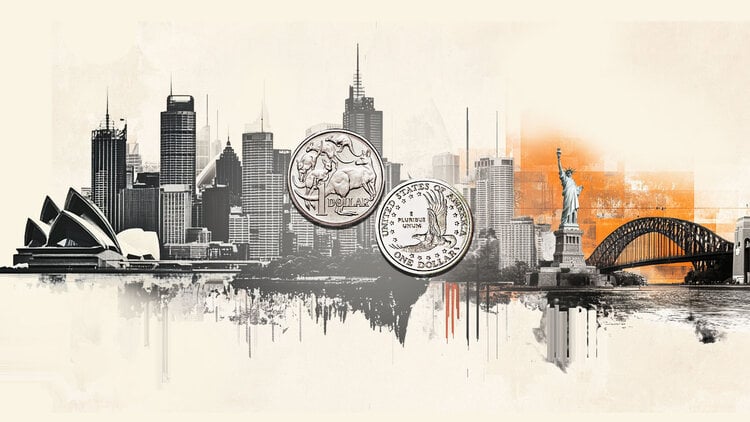
At around 0.6631 at the time of writing, AUD/USD is trading at levels last recorded in December 2025 as its losses deepen on Friday. A global equity sell-off is undermining market sentiment and putting pressure on risk-sensitive currencies, including the Australian Dollar (AUD), although lower Treasury yields are tempering the US Dollar’s (USD) strength. Gold’s sharp decline is adding to the Aussie’s difficulties, reflecting Australia’s position as a major Gold exporter.
With investors shifting from equities into government bonds, US Treasury yields are declining across the curve and the benchmark 10-year yield has slipped below 5%. Having reached a 19-month high of 103.97 on Thursday, the US Dollar Index (DXY) has eased to around 103.75.
Even so, growing expectations of a more hawkish Federal Reserve (Fed) continue to underpin the US Dollar. AUD/USD consequently remains on course for its third consecutive weekly fall.
According to the CME FedWatch Tool, a December rate increase of 25 basis points is almost fully priced in, with traders also betting on a further rise in January. Additional increases later in 2027 are also expected by markets, as Fed officials indicate that bringing inflation back to 2% may require tighter policy.
Growing expectations that the Reserve Bank of Australia (RBA) is approaching the end of its tightening cycle are adding to pressure on the Australian Dollar. Following a 6-3 vote on 3 November to raise the cash rate by 25 basis points to 4.85%, the central bank indicated that a pause may follow.
Reuters reports that the latest employment figures led traders to scale back bets on a further RBA increase and price in around 45 basis points of cuts by the end of 2027. October saw Australia shed 43.5K jobs, following a revised loss of 36.4K in September. Unemployment climbed from 4.7% to 4.9%, reaching its highest level in five years.
Today’s percentage moves in the Australian Dollar (AUD) against the major currencies listed are set out below. Its weakest performance was against the Japanese Yen.
| USD | EUR | GBP | JPY | CAD | AUD | NZD | CHF | |
|---|---|---|---|---|---|---|---|---|
| USD | 0.04% | 0.02% | -0.52% | -0.11% | 0.49% | 0.11% | -0.46% | |
| EUR | -0.04% | -0.03% | -0.54% | -0.15% | 0.44% | 0.06% | -0.50% | |
| GBP | -0.02% | 0.03% | -0.52% | -0.13% | 0.46% | 0.09% | -0.48% | |
| JPY | 0.52% | 0.54% | 0.52% | 0.41% | 1.01% | 0.63% | 0.06% | |
| CAD | 0.11% | 0.15% | 0.13% | -0.41% | 0.60% | 0.21% | -0.36% | |
| AUD | -0.49% | -0.44% | -0.46% | -1.01% | -0.60% | -0.38% | -0.95% | |
| NZD | -0.11% | -0.06% | -0.09% | -0.63% | -0.21% | 0.38% | -0.56% | |
| CHF | 0.46% | 0.50% | 0.48% | -0.06% | 0.36% | 0.95% | 0.56% |
Percentage movements between the major currencies are displayed in the heat map. Select the base currency from the left-hand column and the quote currency from the top row. For instance, choosing the Australian Dollar on the left and following its row across to the US Dollar gives the percentage change for AUD (base)/USD (quote) in the corresponding cell.







Phone: +61 2 8036 8388
Fax: +61 2 8036 8388
Email: support@tmgm.com



The information provided on this website is of a general nature only and does not constitute personal financial advice. Before acting on any information on this website, you should consider the suitability of the information in relation to your objectives, financial situation and needs. Investing in CFDs and FX Margin Contracts carries significant risks and is not suitable for all investors. You may lose more than your initial deposit. You do not own, or have, any interest in the underlying asset. We recommend that you seek independent advice and ensure you fully understand the risks involved before trading. It is important that you read and consider the disclosure document before you acquire any product listed on the website. The information and advertisements offered on this website are not intended for use by any person in any country or jurisdiction where such use would be contrary to local laws and regulations. The Products and Services offered on this website are not intended for residents of the United States, Malaysia and Thailand.
TMGM is authorized and regulated in various jurisdictions.
Trademax Australia Limited, trading as TMGM, is regulated by the Australian Securities and Investments Commission (ASIC), AFSL no. 436416 and is located at Level 28, One International Tower, 100 Barangaroo Avenue, 2000 Sydney, NSW Australia.
Email: support@tmgm.com.au
Trademax Global Limited, trading as TMGM, is authorized and regulated by the Vanuatu Financial Services Commission (VFSC), registration number 40356 and registered at 1276, Kumul Highway, Port Vila, Vanuatu, Republic of Vanuatu.
Email: support@tmgm.com
Trademax Global Markets (SE) Limited, trading as TMGM, is authorized and regulated by the Financial Services Authority (FSA) of Seychelles, with license number SD224. The company is registered at Office No 13, Providence Estate ABIS Centre, Mahe, Seychelles.
Email: support@tmgm.com
Trademax Global Markets (International) Pty Ltd, trading as TMGM, is authorized and regulated by the Financial Services Commission, Mauritius (FSC) with license no. GB22201012, and registered at 33, Edith Cavell Street C/o IQ EQ Fund Services (Mauritius) Ltd Port Louis, 11324 Mauritius.
Email: support@tmgm.com
Copyright © TMGM. All rights reserved

