
News & AnalysisCareer

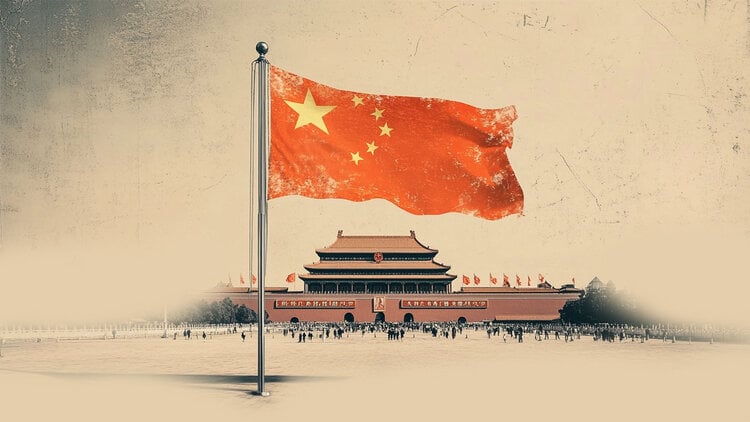
The forthcoming United States (US) tariff announcement drew a response from China’s Foreign Ministry during Wednesday’s European session. A ministry spokesperson said that “tariff and trade wars serve no one’s interests”. Addressing the issue of overcapacity, the spokesperson added: “The so-called of overcapacity does not really exist, and should not be used as a pretext for political manipulation.”
Extreme protectionism by one country can trigger an economic conflict with one or more others, generally described as a trade war. When trade barriers such as tariffs prompt retaliatory restrictions, import costs rise, pushing up the cost of living in turn.
Early in 2018, President Donald Trump introduced trade barriers against China, citing unfair trading practices and intellectual property theft by the Asian giant. This marked the start of an economic conflict between the United States (US) and China. Beijing retaliated with tariffs on a range of US products, including cars and soybeans. Escalating tensions eventually led to the signing of the US-China Phase One trade deal in January 2020. Intended to rebuild stability and trust between the two countries, the agreement required structural reforms and other adjustments to China’s economic and trading system. The coronavirus pandemic subsequently diverted attention from the dispute. Nevertheless, President Joe Biden, who succeeded Trump, retained the tariffs and introduced further levies.
Tensions between the two countries have flared again following Donald Trump’s return to the White House as the 47th US President. In his 2024 election campaign, Trump promised 60% tariffs on China upon returning to office; he resumed the presidency on 20 January 2025. His return is expected to see the US-China trade war pick up where it left off. Reciprocal measures are set to affect the global economic landscape amid disruption to global supply chains, curbing spending, particularly investment, and feeding directly into Consumer Price Index inflation.







Phone: +61 2 8036 8388
Fax: +61 2 8036 8388
Email: support@tmgm.com



The information provided on this website is of a general nature only and does not constitute personal financial advice. Before acting on any information on this website, you should consider the suitability of the information in relation to your objectives, financial situation and needs. Investing in CFDs and FX Margin Contracts carries significant risks and is not suitable for all investors. You may lose more than your initial deposit. You do not own, or have, any interest in the underlying asset. We recommend that you seek independent advice and ensure you fully understand the risks involved before trading. It is important that you read and consider the disclosure document before you acquire any product listed on the website. The information and advertisements offered on this website are not intended for use by any person in any country or jurisdiction where such use would be contrary to local laws and regulations. The Products and Services offered on this website are not intended for residents of the United States, Malaysia and Thailand.
TMGM is authorized and regulated in various jurisdictions.
Trademax Australia Limited, trading as TMGM, is regulated by the Australian Securities and Investments Commission (ASIC), AFSL no. 436416 and is located at Level 28, One International Tower, 100 Barangaroo Avenue, 2000 Sydney, NSW Australia.
Email: support@tmgm.com.au
Trademax Global Limited, trading as TMGM, is authorized and regulated by the Vanuatu Financial Services Commission (VFSC), registration number 40356 and registered at 1276, Kumul Highway, Port Vila, Vanuatu, Republic of Vanuatu.
Email: support@tmgm.com
Trademax Global Markets (SE) Limited, trading as TMGM, is authorized and regulated by the Financial Services Authority (FSA) of Seychelles, with license number SD224. The company is registered at Office No 13, Providence Estate ABIS Centre, Mahe, Seychelles.
Email: support@tmgm.com
Trademax Global Markets (International) Pty Ltd, trading as TMGM, is authorized and regulated by the Financial Services Commission, Mauritius (FSC) with license no. GB22201012, and registered at 33, Edith Cavell Street C/o IQ EQ Fund Services (Mauritius) Ltd Port Louis, 11324 Mauritius.
Email: support@tmgm.com
Copyright © TMGM. All rights reserved


