
News & AnalysisCareer

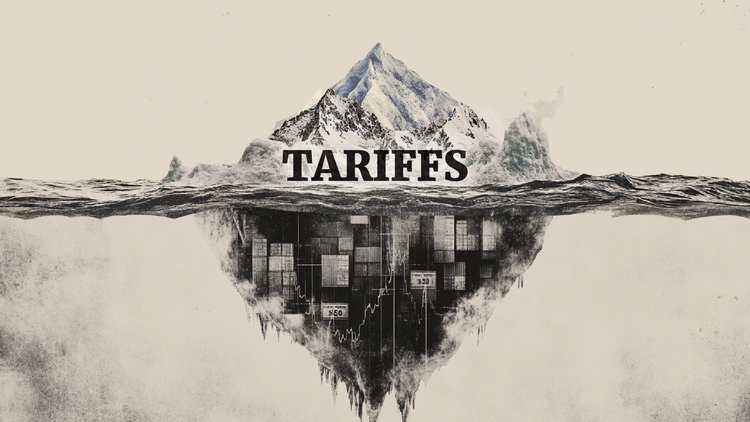
State support for industrial production in China and other trading partners is harming American companies, the Trump administration claims as it prepares to increase tariffs on those economies. The Wall Street Journal reported the plans on Tuesday, citing people familiar with the matter.
Following a months-long investigation into China, the European Union and 14 other countries, US Trade Representative Jamieson Greer could publish the findings as early as this week, although that timetable remains subject to change. In Greer’s view, government subsidies have generated excess industrial capacity, enabling producers in those economies to undercut US manufacturers by selling lower-priced goods overseas.
Following the report, US stock futures are under pressure, with Nasdaq 100 futures down 2.38% and Dow futures roughly 1% lower. Earlier gains are being pared in S&P 500 futures.
Before becoming a US stock exchange, the Nasdaq began as an electronic system for stock quotations. Its initial role was limited to quoting over-the-counter (OTC) stocks; exchange trading came later. By 1991, it accounted for 46% of the entire US securities market, and in 1998 it became the first US stock exchange to offer online trading. Several indices are also produced by the Nasdaq. These include the Nasdaq 100 and its broadest measure, the Nasdaq Composite, which covers all 2,500-plus stocks listed on the exchange.
Comprising 100 non-financial companies listed on the Nasdaq stock exchange, the Nasdaq 100 is a large-cap index. Its constituents represent only a small proportion of the thousands of Nasdaq-listed stocks, yet account for over 90% of the movement. Each company’s weighting, and therefore its influence on the index, depends on its market capitalisation. Technology-focused businesses feature prominently, alongside companies from other sectors and those based outside the US. Since 1986, the Nasdaq 100 has delivered an average annual return of 17.23%.
Traders can access the Nasdaq 100 through several instruments. Contracts for difference (CFDs) are available through most retail brokers and spread betting platforms. For investors with a longer time horizon, exchange-traded funds (ETFs) offer share-like trading while tracking the index, removing the need to purchase shares in all 100 constituent companies. The Invesco QQQ Trust (QQQ) is one such ETF. Traders can also use Nasdaq 100 futures contracts to speculate on the index’s future direction. With options, the holder has the right, but no obligation, to buy or sell the Nasdaq 100 at a specified future price, known as the strike price.
Although numerous factors influence the Nasdaq 100, the combined performance of its constituents is the principal driver, as reflected in quarterly and annual earnings reports. Economic data from the US and elsewhere also shapes investor sentiment, with a positive mood supporting gains. Interest rates set by the Federal Reserve (Fed) are another influence: they determine borrowing costs for the many companies that rely heavily on credit. Inflation can therefore play a significant role, alongside other indicators that inform the Fed’s decisions.







Phone: +61 2 8036 8388
Fax: +61 2 8036 8388
Email: support@tmgm.com



The information provided on this website is of a general nature only and does not constitute personal financial advice. Before acting on any information on this website, you should consider the suitability of the information in relation to your objectives, financial situation and needs. Investing in CFDs and FX Margin Contracts carries significant risks and is not suitable for all investors. You may lose more than your initial deposit. You do not own, or have, any interest in the underlying asset. We recommend that you seek independent advice and ensure you fully understand the risks involved before trading. It is important that you read and consider the disclosure document before you acquire any product listed on the website. The information and advertisements offered on this website are not intended for use by any person in any country or jurisdiction where such use would be contrary to local laws and regulations. The Products and Services offered on this website are not intended for residents of the United States, Malaysia and Thailand.
TMGM is authorized and regulated in various jurisdictions.
Trademax Australia Limited, trading as TMGM, is regulated by the Australian Securities and Investments Commission (ASIC), AFSL no. 436416 and is located at Level 28, One International Tower, 100 Barangaroo Avenue, 2000 Sydney, NSW Australia.
Email: support@tmgm.com.au
Trademax Global Limited, trading as TMGM, is authorized and regulated by the Vanuatu Financial Services Commission (VFSC), registration number 40356 and registered at 1276, Kumul Highway, Port Vila, Vanuatu, Republic of Vanuatu.
Email: support@tmgm.com
Trademax Global Markets (SE) Limited, trading as TMGM, is authorized and regulated by the Financial Services Authority (FSA) of Seychelles, with license number SD224. The company is registered at Office No 13, Providence Estate ABIS Centre, Mahe, Seychelles.
Email: support@tmgm.com
Trademax Global Markets (International) Pty Ltd, trading as TMGM, is authorized and regulated by the Financial Services Commission, Mauritius (FSC) with license no. GB22201012, and registered at 33, Edith Cavell Street C/o IQ EQ Fund Services (Mauritius) Ltd Port Louis, 11324 Mauritius.
Email: support@tmgm.com
Copyright © TMGM. All rights reserved


