
News & AnalysisCareer

Mixed derivatives readings, fading momentum indicators and increasingly heated market conditions point to caution on Thursday, with Ripple (XRP) below $1.36 and Stellar (XLM) falling below $0.183. Both altcoins remain under pressure, struggling to maintain their recent attempts at recovery.

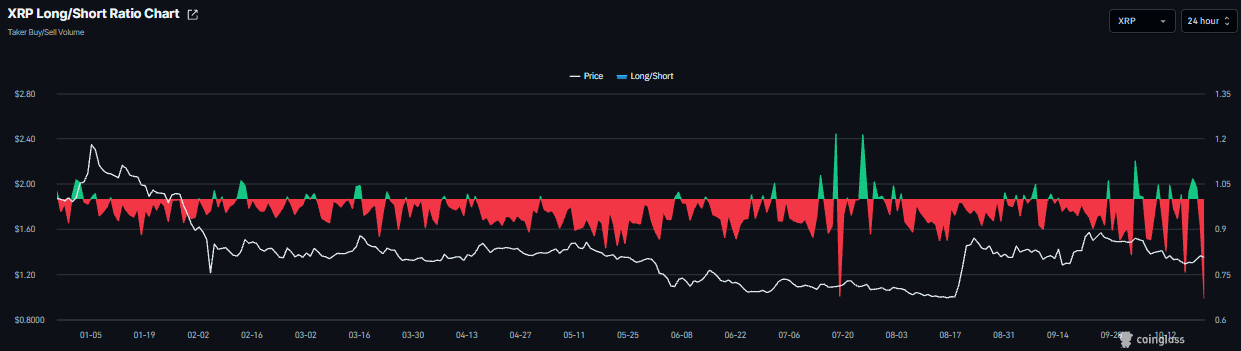
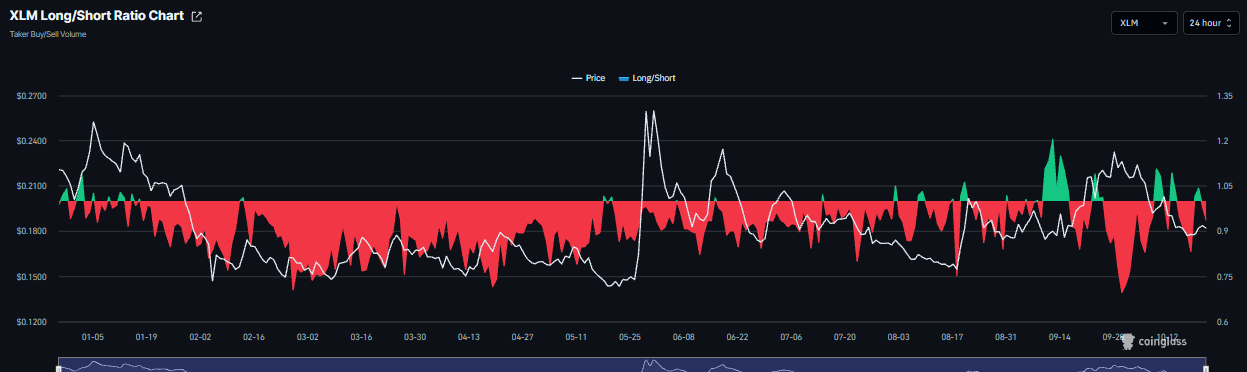
CoinGlass’ long-to-short ratios stand at 0.67 for XRP and 0.93 for XLM on Thursday, close to their lowest readings in over a month. The derivatives figures point to deteriorating conditions for Ripple and Stellar: readings below one signal bearish sentiment, with traders positioning for asset prices to decline.
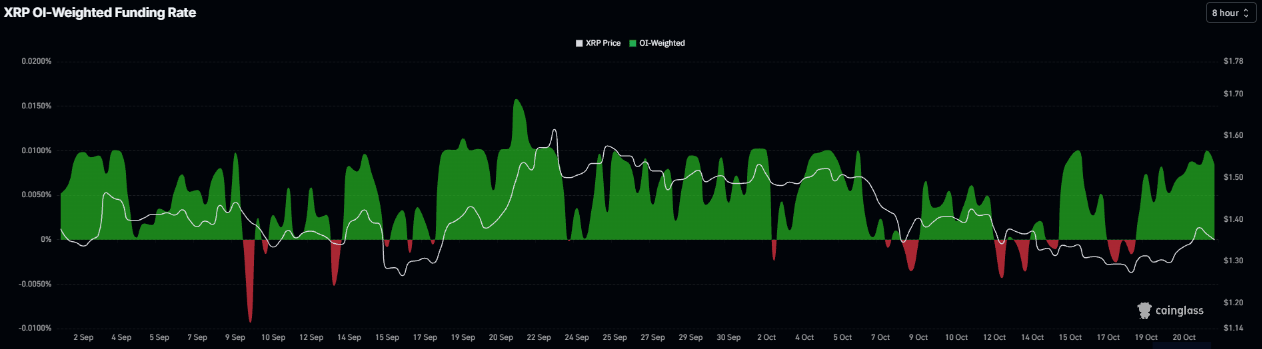
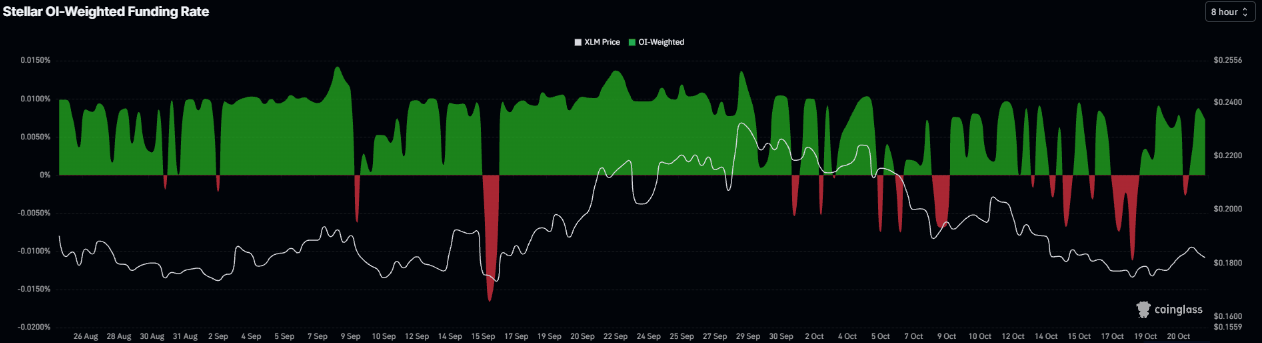
Funding rates offer a contrasting signal. After turning positive on Monday for XRP and Wednesday for XLM, they stand at 0.0084% and 0.0072%, respectively, on Thursday. This means holders of long positions are paying those with short positions, suggesting a mildly bullish outlook.
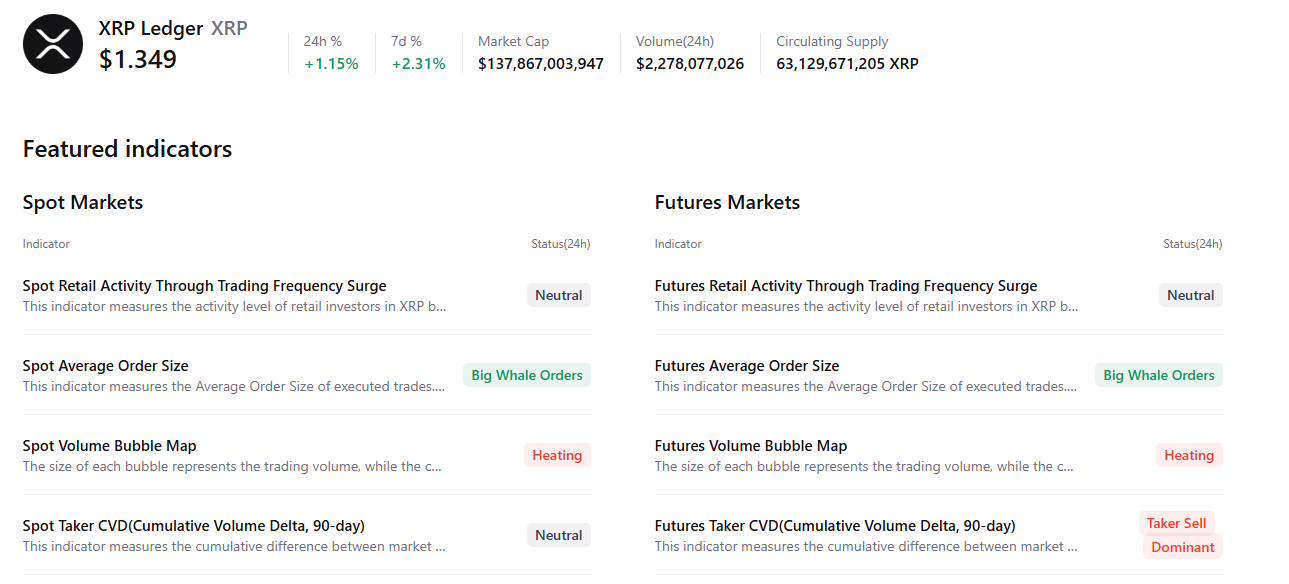
A bearish outlook for both altcoins emerges from CryptoQuant’s summary data. Large whale orders and heating conditions feature in XRP’s spot and futures markets, while selling dominates futures trading. Together, these readings suggest Ripple traders retain a cautious, bearish bias.
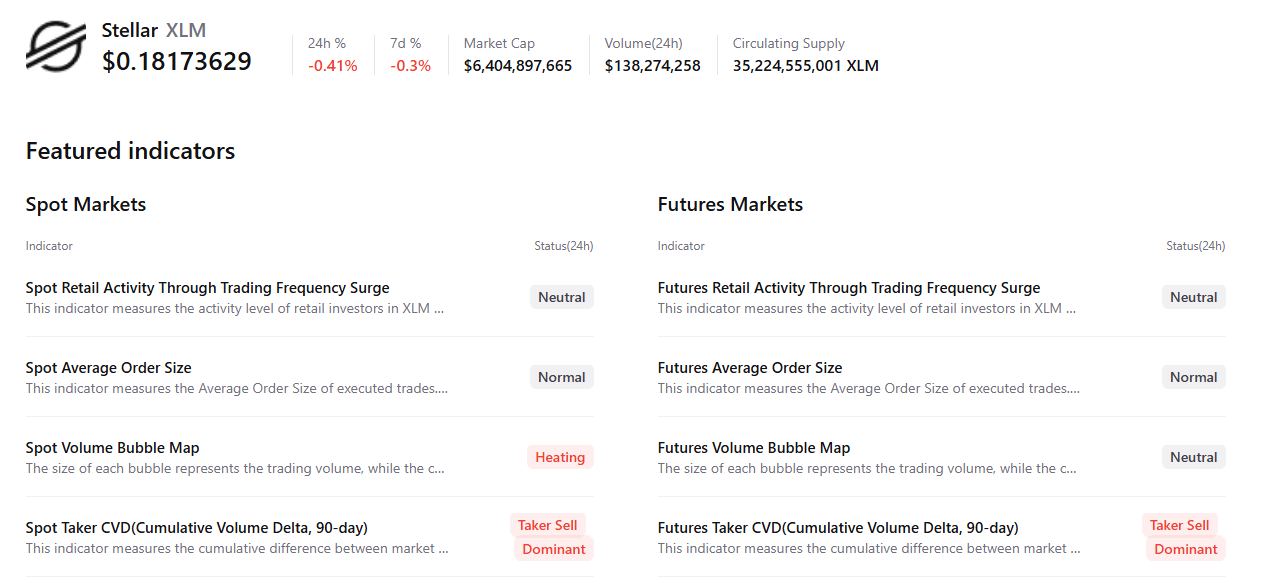
Stellar traders also show a negative outlook: although conditions in XLM’s spot market are healing, sellers dominate its futures market.
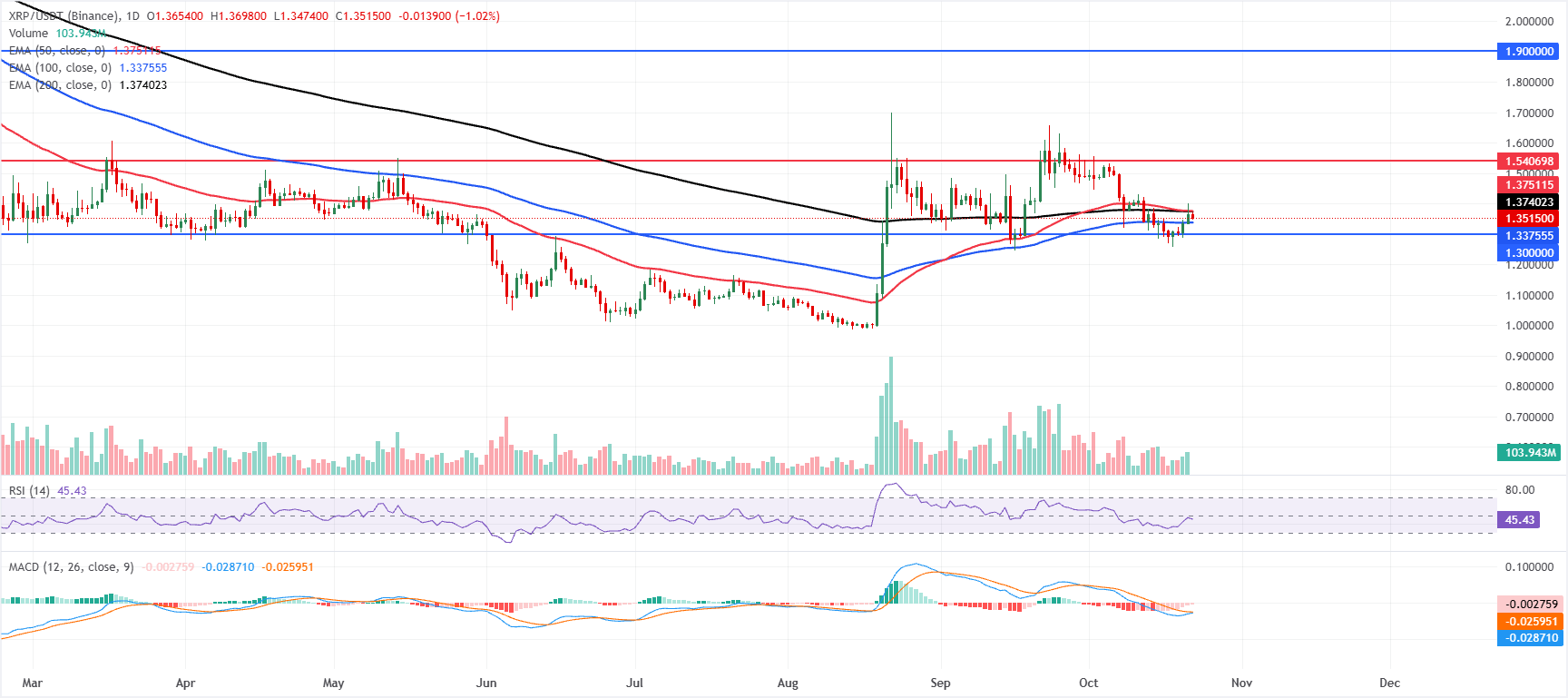
At $1.352 on Thursday, XRP remains below its medium- and long-term Exponential Moving Averages (EMAs). A narrow overhead resistance band, comprising the 200-day EMA at $1.374 and the 50-day EMA at $1.375, preserves the bearish near-term bias, even as the price stabilises above the 100-day EMA at $1.337.
Unless buyers regain the clustered EMAs, recovery attempts could remain constrained. The Relative Strength Index (RSI), at 45, edges slightly lower, and the Moving Average Convergence Divergence (MACD) is still marginally negative.
The first supply zone lies at the 200-day EMA of $1.374 and the closely aligned 50-day EMA of $1.375. A sustained move above this immediate resistance band would clear a path towards the horizontal barrier at $1.540, followed by the higher resistance level near $1.900.
Support initially lies around the current price area, underpinned by the 100-day EMA at $1.337, ahead of the horizontal floor around $1.300. Should XRP close below $1.300 on a daily basis, the broader bearish tone would strengthen, leaving scope for deeper losses.
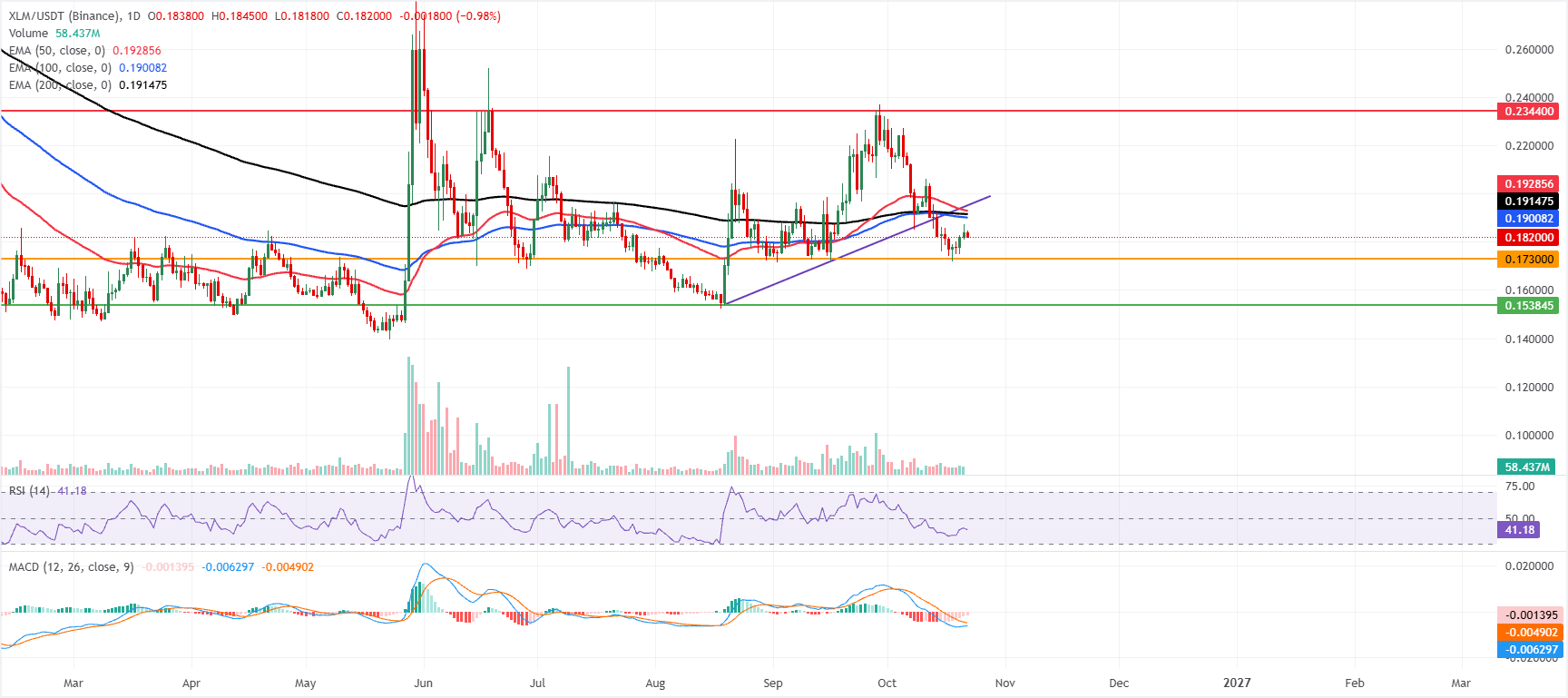
Trading at $0.182 on Thursday, XLM continues to face pressure following its recent rejection at higher levels. The price remains beneath a cluster of EMAs, limiting the broader outlook: the 100-day EMA is around $0.190, the 200-day EMA near $0.191 and the 50-day EMA close to $0.192.
Buying interest appears muted, with the RSI near 41. Meanwhile, a negative MACD indicates that downward momentum persists, albeit at a moderating pace.
Any recovery first faces the EMA band at roughly $0.190 to $0.192. Beyond that, the previously breached rising trendline now provides resistance around $0.195, ahead of a more substantial obstacle at the horizontal barrier near $0.234.
If prices weaken, immediate support lies at $0.173. A lower floor is situated near $0.153, where buyers previously intervened to halt declines.
(The technical analysis of this story was written with the help of an AI tool. Know more.)
Demand and adoption among market participants are influenced by token launches. When a crypto exchange lists an asset, its liquidity increases and new participants join its network. These developments are generally bullish for a digital asset.
During a hack, an attacker uses exploits, bugs or other methods to seize a large quantity of an asset from a DeFi bridge, an exchange’s hot wallet or another crypto platform. The attacker then moves the tokens off exchange platforms, ultimately selling them or exchanging them for other cryptocurrencies or stablecoins. Widespread panic often follows such incidents, triggering a sell-off in the affected assets.
The direct effect on the US Dollar is the main channel through which macroeconomic events, such as the US Federal Reserve’s interest rate decisions, influence crypto assets. Higher interest rates usually weigh on Bitcoin and altcoin prices, while lower rates tend to have the opposite effect. A decline in the US Dollar index makes risk assets and the associated trading leverage cheaper, which in turn pushes crypto prices higher.
By cutting miners’ block rewards in half, halvings restrict the asset’s supply and are therefore generally regarded as bullish events. If demand stays constant while supply falls, the asset’s price rises.







Phone: +61 2 8036 8388
Fax: +61 2 8036 8388
Email: support@tmgm.com



The information provided on this website is of a general nature only and does not constitute personal financial advice. Before acting on any information on this website, you should consider the suitability of the information in relation to your objectives, financial situation and needs. Investing in CFDs and FX Margin Contracts carries significant risks and is not suitable for all investors. You may lose more than your initial deposit. You do not own, or have, any interest in the underlying asset. We recommend that you seek independent advice and ensure you fully understand the risks involved before trading. It is important that you read and consider the disclosure document before you acquire any product listed on the website. The information and advertisements offered on this website are not intended for use by any person in any country or jurisdiction where such use would be contrary to local laws and regulations. The Products and Services offered on this website are not intended for residents of the United States, Malaysia and Thailand.
TMGM is authorized and regulated in various jurisdictions.
Trademax Australia Limited, trading as TMGM, is regulated by the Australian Securities and Investments Commission (ASIC), AFSL no. 436416 and is located at Level 28, One International Tower, 100 Barangaroo Avenue, 2000 Sydney, NSW Australia.
Email: support@tmgm.com.au
Trademax Global Limited, trading as TMGM, is authorized and regulated by the Vanuatu Financial Services Commission (VFSC), registration number 40356 and registered at 1276, Kumul Highway, Port Vila, Vanuatu, Republic of Vanuatu.
Email: support@tmgm.com
Trademax Global Markets (SE) Limited, trading as TMGM, is authorized and regulated by the Financial Services Authority (FSA) of Seychelles, with license number SD224. The company is registered at Office No 13, Providence Estate ABIS Centre, Mahe, Seychelles.
Email: support@tmgm.com
Trademax Global Markets (International) Pty Ltd, trading as TMGM, is authorized and regulated by the Financial Services Commission, Mauritius (FSC) with license no. GB22201012, and registered at 33, Edith Cavell Street C/o IQ EQ Fund Services (Mauritius) Ltd Port Louis, 11324 Mauritius.
Email: support@tmgm.com
Copyright © TMGM. All rights reserved


