

Trading
Explore a wide range of markets with competitive pricing, deep liquidity, and advanced trading tools.
Learn More 
Platform
Trade seamlessly with TMGM's powerful platform, built for speed, precision, and a superior trading experience.
Learn More Trading Platform
Academy
Learn the fundamentals of trading with beginner-friendly resources, including guides, webinars, and market insights.
Learn More News & Analysis
Get real-time market updates and expert analysis to stay ahead of trading opportunities
Learn More News & Analysis
About
Learn what sets TMGM apart — our global presence, regulatory strength, and commitment to innovation in trading.
Learn More Why Choose TMGM
Sponsorship
What does Bitget CEO Gracy Chen think about the $388M hack, user trust, AI and trading’s future?
- Concerns over the safety of user funds on centralised exchanges intensified after September’s Bitget hack wiped out $388 million.
- Security and product development benefit from technological progress, but AI also widens the threat landscape, making technology a double-edged sword, according to BitGet CEO Gracy Chen.
- The convergence of crypto and traditional finance across borders puts Real World Asset tokenisation at the centre of growth and the future of trading.
Security concerns have weighed on the cryptocurrency industry as losses from breaches in 2026 alone reached approximately $8.65 billion to $8.98 billion, according to CertiK. Among these were September’s $388 million hack of the Bitget exchange and last week’s Binance exploit, which caused losses of roughly $6.3 billion.
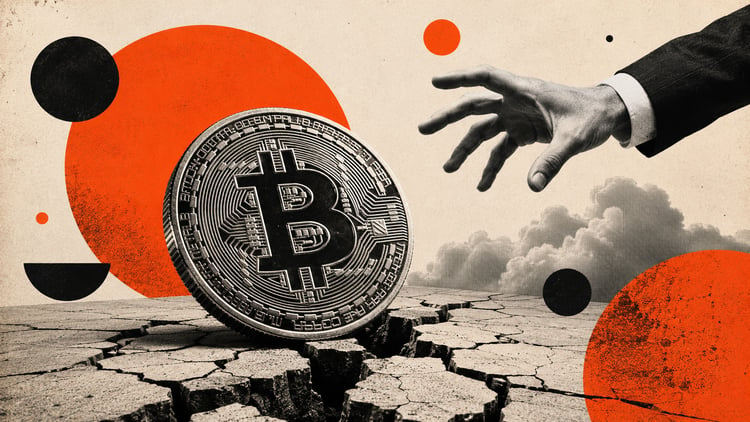
With Artificial Intelligence (AI) technology advancing, the Bitget attack brought the safety of user funds on centralised cryptocurrency exchanges (CEXs) into sharp focus.
Against this backdrop, the way Bitget handled the crisis drew attention. Speaking exclusively to FXStreet, Bitget CEO Gracy Chen details what happened and what her team learnt, while sharing her wider perspective on stronger security, trust-building, AI and the changing trading landscape.
What lessons emerged from the Bitget hack?
Small unauthorised transfers marked the start of the Bitget hack, which then grew into larger withdrawals across multiple chains. Within minutes, the exchange’s security systems identified the irregularities and halted withdrawals. An internal investigation found that the attackers had exploited a flaw in a third-party security product, triggering the exchange’s transaction authorisation process. The breach did not compromise either private keys or cold wallets.
Describing the company’s response to FXStreet, Chen said: “We did our best, and within a few hours we made the decision to bear the loss as a company rather than have any of our users bear it,”
Following the incident, Bitget revamped access to sensitive systems and introduced multiple approval layers for critical operations. It also strengthened monitoring and comprehensively revised its approach to assessing and integrating third-party products. Access available to external products within the exchange’s network was restricted further.
Transparency and communication remained priorities as Bitget worked round the clock to contain the incident and resume operations. Withdrawals were reinstated within three days. Chen noted that panic initially drove Bitcoin (BTC) outflows, but sentiment turned once Ethereum (ETH) withdrawals resumed, with inflows beginning to exceed outflows.
Asked about the possibility of another security breach at Bitget, Chen stressed the need for ongoing improvements that keep pace with technological progress.
Acknowledging the limits of security assurances, Chen said: “I want people to know that I cannot promise, and I don’t think any trading platform can promise that there will be no hacks,” She added: “But what we can promise is that if anything like this happens, we will communicate transparently, and we will put the interests of our users first.”
Can technology strengthen security while widening threats?
For Chen, technology works both ways. Improvements in system monitoring, AI-powered detection and multi-layered approval requirements for critical operations help safeguard user funds. Yet the same advances can enable increasingly sophisticated attacks, including those involving AI.
From research and signal detection to execution, risk monitoring and marketing programmes, AI is now embedded in many Bitget operations. Chen nevertheless warned against depending too heavily on it, saying that “AI at least today, is here to make good strategies work better, rather than just giving someone with no trading background a 100% guaranteed strategy.”
How could RWA tokenisation shape the future of trading?
Looking beyond the hack, Chen outlined Bitget’s long-term direction, beginning with its newly launched Alliance profit-sharing programme. Under the programme, about 30% of trading profits are shared with users as the exchange seeks to restore trust following the security incident.
A universal exchange is Bitget’s long-term ambition: a single platform combining forex, equities and real-world assets (RWAs), with stablecoins as the base currency. Although regulatory hurdles vary across jurisdictions, Chen said interest in accessing traditional assets through cryptocurrency exchange platforms is growing among users.
On the scale needed to sustain the business, Chen added: “You don’t need to be the biggest. As long as you have a good number of users who use your platform daily, it’s a profitable and sustainable business. You don’t have to outperform everyone to stay in the competition,”
Progress in RWA tokenisation has delivered growth milestones, but Chen said several elements must still fall into place for the next phase to take firm shape. Liquidity remains a challenge, particularly at weekends. Crypto exchanges also have considerable ground to cover before investors in tokenised assets can enjoy the same rights as investors in traditional markets.
Explaining the industry’s efforts, Chen said: “This is something the industry is moving towards in order to resolve it, or to provide voting rights, or to allow our users to attend Annual General Meetings (AGMs), or the like,”
As the distinction between crypto and traditional finance fades, the CEO envisages a future that could differ from today’s landscape. Investors are likely to turn their attention towards platforms offering fair value, weekend operations and low fees, alongside a solution to the liquidity challenge.
Summing up her outlook, Chen said: “I think the boundaries won’t really be clear in the future,”
POPULAR ARTICLES
1US Dollar: Policy outlook remains in focus as data send mixed signals – BBH2Why is British Pound rising above 1.3400 as Oil sell-off overshadows strong US PMI?3What does Bitget CEO Gracy Chen think about the $388M hack, user trust, AI and trading’s future?4European Central Bank: Why are leadership changes about more than hawks and doves? - Standard Chartered5Silver Price Forecast: Bearish trend persists despite XAG/USD regaining $50 as Oil slides6October US ISM Manufacturing PMI rises to 55.5, exceeding the 54.6 forecast7Australian Dollar: Does a largely priced-in RBA hike leave scope for disappointment? – DBS8WTI: How is diplomacy reducing the risk premium? – TD Securities9US-Iran diplomatic efforts buoy trader sentiment, sending WTI down over 5%


Get Started!
Sign up and access the Global Markets in less than 3 minutes

Connect With Us









Contacts
Phone: +61 2 8036 8388
Fax: +61 2 8036 8388
Email: support@tmgm.com



The information provided on this website is of a general nature only and does not constitute personal financial advice. Before acting on any information on this website, you should consider the suitability of the information in relation to your objectives, financial situation and needs. Investing in CFDs and FX Margin Contracts carries significant risks and is not suitable for all investors. You may lose more than your initial deposit. You do not own, or have, any interest in the underlying asset. We recommend that you seek independent advice and ensure you fully understand the risks involved before trading. It is important that you read and consider the disclosure document before you acquire any product listed on the website. The information and advertisements offered on this website are not intended for use by any person in any country or jurisdiction where such use would be contrary to local laws and regulations. The Products and Services offered on this website are not intended for residents of the United States, Malaysia and Thailand.
TMGM is authorized and regulated in various jurisdictions.
Trademax Australia Limited, trading as TMGM, is regulated by the Australian Securities and Investments Commission (ASIC), AFSL no. 436416 and is located at Level 28, One International Tower, 100 Barangaroo Avenue, 2000 Sydney, NSW Australia.
Email: support@tmgm.com.au
Trademax Global Limited, trading as TMGM, is authorized and regulated by the Vanuatu Financial Services Commission (VFSC), registration number 40356 and registered at 1276, Kumul Highway, Port Vila, Vanuatu, Republic of Vanuatu.
Email: support@tmgm.com
Trademax Global Markets (SE) Limited, trading as TMGM, is authorized and regulated by the Financial Services Authority (FSA) of Seychelles, with license number SD224. The company is registered at Office No 13, Providence Estate ABIS Centre, Mahe, Seychelles.
Email: support@tmgm.com
Trademax Global Markets (International) Pty Ltd, trading as TMGM, is authorized and regulated by the Financial Services Commission, Mauritius (FSC) with license no. GB22201012, and registered at 33, Edith Cavell Street C/o IQ EQ Fund Services (Mauritius) Ltd Port Louis, 11324 Mauritius.
Email: support@tmgm.com
Copyright © TMGM. All rights reserved