


Trading
Explore a wide range of markets with competitive pricing, deep liquidity, and advanced trading tools.
Learn More 
Platform
Trade seamlessly with TMGM's powerful platform, built for speed, precision, and a superior trading experience.
Learn More Trading Platform
Academy
Learn the fundamentals of trading with beginner-friendly resources, including guides, webinars, and market insights.
Learn More News & Analysis
Get real-time market updates and expert analysis to stay ahead of trading opportunities
Learn More News & Analysis
About
Learn what sets TMGM apart — our global presence, regulatory strength, and commitment to innovation in trading.
Learn More Why Choose TMGM
Sponsorship
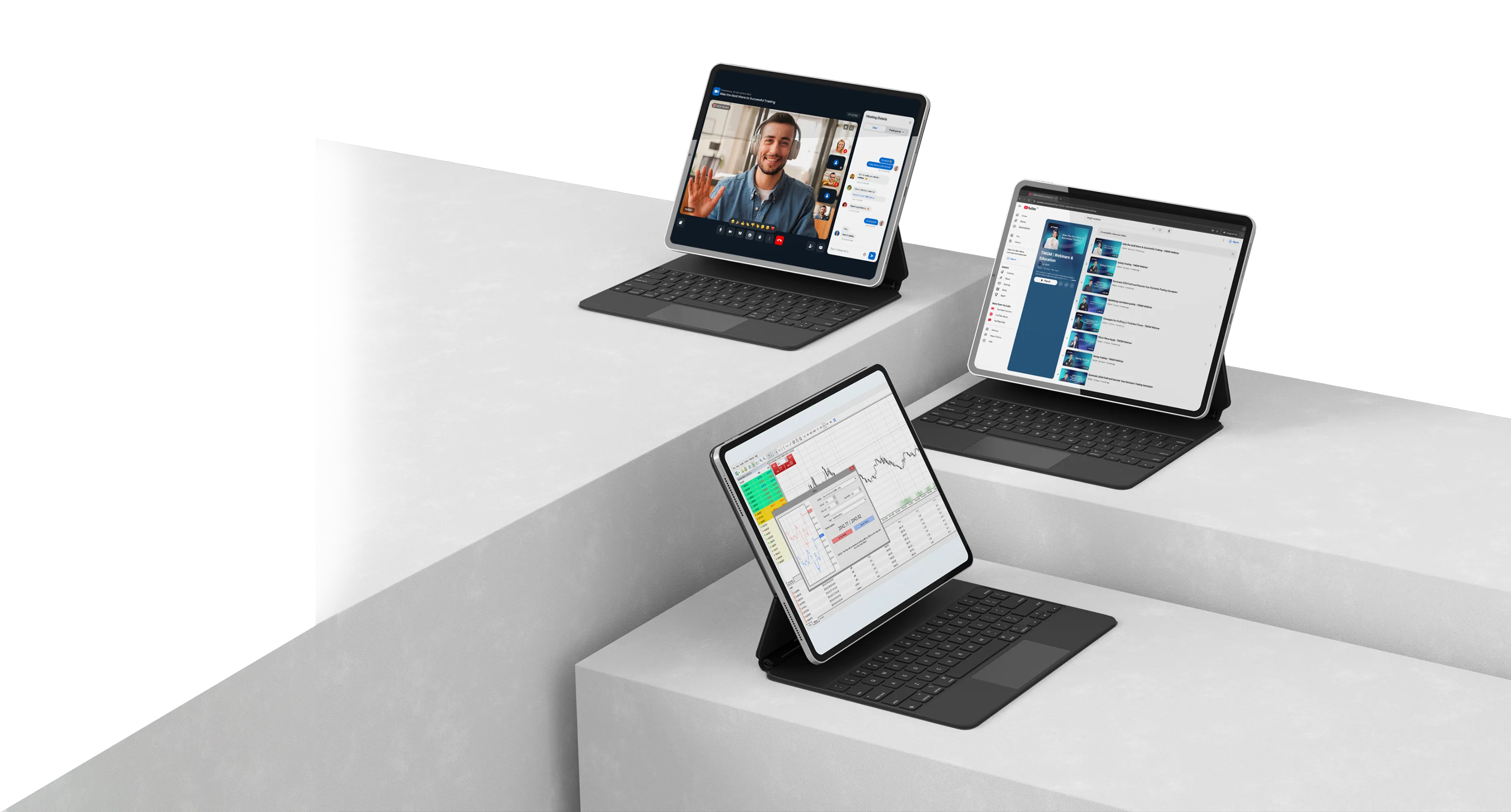
Live Webinars
Trade Smarter with Expert-Led
Watch Now
Why Attend TMGM Webinar?

Top Tips Strategy Tips
Latest trends in U.S. stocks, forex, and gold

In-depth Case Study Analysis
Learning advanced trading strategies

Learn From Industry Experts
Gain valuable knowledge from experienced traders
Who should Join TMGM Webinar?

Beginner Trader
Learn market analysis from scratch

Experienced Investors
Optimize your trading strategies

Institutions & Professionals
Gain deeper insights into market dynamics
Our Upcoming Webinars
October 2026
OCT
15
21:00 | GMT+8
Thai
CRT 2026: H4 แท่งเดียว จบแผนเทรดทั้งวัน

Coach Dew
Rhea Trader
Read More

0
Days
00:
Hrs
00:
Mins
00
Secs
Watch Now
OCT
16
02:00 | GMT+8
German
WL Vola Open Robot for MetaTrader

Wim Lievens
Speaker
Read More
0
Days
00:
Hrs
00:
Mins
00
Secs
Watch Now
Our Upcoming Webinar
OCT
15
21:00 | GMT+8
0
Days
00:
Hrs
00:
Mins
00
Secs

Thai
CRT 2026: H4 แท่งเดียว จบแผนเทรดทั้งวัน
Coach Dew
Rhea Trader
Read More
OCT
16
02:00 | GMT+8
0
Days
00:
Hrs
00:
Mins
00
Secs
German
WL Vola Open Robot for MetaTrader
Wim Lievens
Speaker
Read More
Did you miss a webinar? All webinars available on our

You've Learned, Now Let's Trade
Open your account in minutes.
Open Account
Meet The Experts


Chinese

Calvin Wang
TMGM Group Trading Strategy Team Mentor
See More

Creator of the "King of K-line" Technical Analysis.
Former Foreign Exchange Analyst at the Royal Bank of Scotland (RBS).
Experienced in developing trading strategies and technical analysis.

Chinese
Abel Gao
TMGM Group Trading Strategy Team Mentor
See More
11 years of experience as a Financial Analyst.
Skilled in chart analysis and statistical modeling.
Focused on identifying and analyzing market movements.

English

Gero Azrul
Full-Time Trader with 14 years of experience
See More
Full-time trader with 14 years of experience.
Recipient of the 2020 Malaysia Trader Award - Best Trading Master.
Shares practical trading insights for market participants.

Vietnamese

Nguyen Le Minh
Forex Market Expert with 7 years of experience
See More
7 years of experience in stock, cryptocurrency, and forex investment.
Founder and CEO of mInvest and Zteam Trader.
Engages with over 10,000 members to support trading knowledge development.

Thailand

King Prapat
A Full-Time Trader with over 10 years in Financial Markets
See More
Full Time Trader - Stock Futures, Options, CFDs.
Over 10 years of trading experience.
Developer of strategies and automated trading programs.
- ChineseCalvin WangTMGM Group Trading Strategy Team MentorSee MoreCreator of the "King of K-line" Technical Analysis.Former Foreign Exchange Analyst at the Royal Bank of Scotland (RBS).Experienced in developing trading strategies and technical analysis.
- ChineseAbel GaoTMGM Group Trading Strategy Team MentorSee More11 years of experience as a Financial Analyst.Skilled in chart analysis and statistical modeling.Focused on identifying and analyzing market movements.
- EnglishGero AzrulFull-Time Trader with 14 years of experienceSee MoreFull-time trader with 14 years of experience.Recipient of the 2020 Malaysia Trader Award - Best Trading Master.Shares practical trading insights for market participants.
- VietnameseNguyen Le MinhForex Market Expert with 7 years of experienceSee More7 years of experience in stock, cryptocurrency, and forex investment.Founder and CEO of mInvest and Zteam Trader.Engages with over 10,000 members to support trading knowledge development.
- ThailandKing PrapatA Full-Time Trader with over 10 years in Financial MarketsSee MoreFull Time Trader - Stock Futures, Options, CFDs.Over 10 years of trading experience.Developer of strategies and automated trading programs.
Item 1 of 5
No Time to Watch?
We've picked out the must-see moments just for you.


Item 1 of 0


Ready to Elevate Your Trading Journey?
Open a TMGM demo account today and start putting your strategies into action.
With up to 10,000,000 USD in virtual funds, our demo platform allows you to practice, refine your skills, and explore the markets without risking real money.
Maximize Your Trading Strategy with Our Expertly Curated Resources





Unlock the Global Markets at TMGM
1
Apply for a Live
Account
Account
2
Fund Your
Account
Account
3
Start Trading
Instantly
Instantly
Open Your Account Now!
Recommended for you

Stop Loss: What It Is, How It Works and How to Set One
A stop loss is an order that closes an open trade automatically at a price you set in advance to limit losses. On a long position (a buy trade that gains when price rises) the stop loss sits below the entry price, and on a short position (a sell trade that gains when price falls) it sits above it.
For forex and CFD traders—especially intermediate to advanced retail traders using MetaTrader 4 or MetaTrader 5—a stop loss is a core risk-management tool in leveraged markets, because it helps protect capital, supports position sizing, and reduces emotional exit decisions when prices move fast. This guide explains what stop losses are, how they work, the main order types, how to set and place them, their risks and limitations, common mistakes, and answers to frequently asked questions. A stop loss does not remove risk, and slippage can mean the final exit price differs from the trigger price, but it helps limit losses and manage risk before the trade starts, particularly when using leverage.
Continue reading
2026-10-22 04:06:01

Margin Call Meaning: What It Is, What Triggers It and How to Avoid One
A margin call is a warning from your broker that your account equity has fallen too low to support your open positions. When a margin call arrives, you need to add funds or reduce positions before the broker starts closing them. Margin calls on CFD and forex accounts come first in this guide, and stock accounts are compared later.
Continue reading
2026-10-14 09:43:43

Top 15 Weakest Currencies in the World
The 15 weakest currencies in the world rank here by their value against the US dollar, from the Iranian rial down to the Nigerian naira. The order follows face value, how many units it takes to buy one dollar, which is not the same as economic strength.
Continue reading
2026-07-28 00:59:25
Get Started!
Sign up and access the Global Markets in less than 3 minutes

Connect With Us









Contacts
Phone: +61 2 8036 8388
Fax: +61 2 8036 8388
Email: support@tmgm.com



The information provided on this website is of a general nature only and does not constitute personal financial advice. Before acting on any information on this website, you should consider the suitability of the information in relation to your objectives, financial situation and needs. Investing in CFDs and FX Margin Contracts carries significant risks and is not suitable for all investors. You may lose more than your initial deposit. You do not own, or have, any interest in the underlying asset. We recommend that you seek independent advice and ensure you fully understand the risks involved before trading. It is important that you read and consider the disclosure document before you acquire any product listed on the website. The information and advertisements offered on this website are not intended for use by any person in any country or jurisdiction where such use would be contrary to local laws and regulations. The Products and Services offered on this website are not intended for residents of the United States, Malaysia and Thailand.
TMGM is authorized and regulated in various jurisdictions.
Trademax Australia Limited, trading as TMGM, is regulated by the Australian Securities and Investments Commission (ASIC), AFSL no. 436416 and is located at Level 28, One International Tower, 100 Barangaroo Avenue, 2000 Sydney, NSW Australia.
Email: support@tmgm.com.au
Trademax Global Limited, trading as TMGM, is authorized and regulated by the Vanuatu Financial Services Commission (VFSC), registration number 40356 and registered at 1276, Kumul Highway, Port Vila, Vanuatu, Republic of Vanuatu.
Email: support@tmgm.com
Trademax Global Markets (SE) Limited, trading as TMGM, is authorized and regulated by the Financial Services Authority (FSA) of Seychelles, with license number SD224. The company is registered at Office No 13, Providence Estate ABIS Centre, Mahe, Seychelles.
Email: support@tmgm.com
Trademax Global Markets (International) Pty Ltd, trading as TMGM, is authorized and regulated by the Financial Services Commission, Mauritius (FSC) with license no. GB22201012, and registered at 33, Edith Cavell Street C/o IQ EQ Fund Services (Mauritius) Ltd Port Louis, 11324 Mauritius.
Email: support@tmgm.com
Copyright © TMGM. All rights reserved