

Trading
Explore a wide range of markets with competitive pricing, deep liquidity, and advanced trading tools.
Learn More 
Platform
Trade seamlessly with TMGM's powerful platform, built for speed, precision, and a superior trading experience.
Learn More Trading Platform
Academy
Learn the fundamentals of trading with beginner-friendly resources, including guides, webinars, and market insights.
Learn More News & Analysis
Get real-time market updates and expert analysis to stay ahead of trading opportunities
Learn More News & Analysis
About
Learn what sets TMGM apart — our global presence, regulatory strength, and commitment to innovation in trading.
Learn More Why Choose TMGM
Sponsorship
BoJ’s Ueda: Keeping inflation near 2% is crucial
Further policy tightening remains on the agenda for Bank of Japan (BoJ) Governor Kazuo Ueda, who stressed on Wednesday the importance of keeping inflation close to the 2% target. He also said the central bank would continue increasing its policy rate in line with developments in the economy, prices and financial conditions.
What did Ueda say?
Crucial to ensure inflation stays near 2%.
Will keep raising policy rate based on economic, price, financial trends.
Financial conditions still accommodative.
Effect of food consumption tax reduction likely to remain limited.
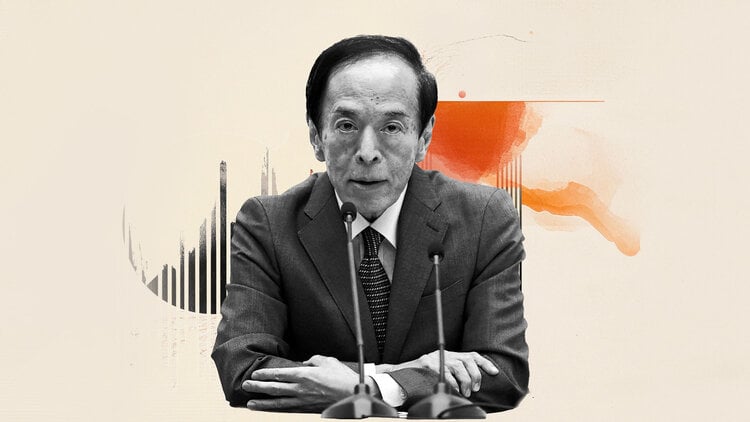
Does Ueda’s tightening bias support the YEN as BoJ plays down tax-cut pressure on inflation?
A mildly hawkish message emerges from Ueda’s emphasis on the need to “keep raising” the policy rate, even though his 7/10 score is close to the historical average of 7.2/10. His commitment to inflation near 2%, alongside the assessment that financial conditions remain accommodative, points to scope for further normalisation and offers modest support to the YEN.
Confidence in the resilience of underlying price momentum is reflected in Ueda’s assessment that the food consumption tax reduction will have a limited impact. Taken together, his remarks strengthen the case for gradual tightening tracked by FXS Speechtracker. This helps contain downside risks for the YEN, without amounting to a pronounced hawkish surprise.
How is USD/JPY reacting?
USD/JPY stands at 159.65 at the time of writing, a gain of 0.19% for the day.
Bank of Japan: frequently asked questions
As Japan’s central bank, the Bank of Japan (BoJ) determines the country’s monetary policy. It is mandated to issue banknotes and manage currency and monetary conditions to maintain price stability, defined by an inflation target of around 2%.
Against a backdrop of low inflation, the Bank of Japan adopted an ultra-loose monetary policy in 2013 to support economic activity and lift prices. The approach centres on Quantitative and Qualitative Easing (QQE): printing banknotes to purchase assets, including government and corporate bonds, and thereby supplying liquidity. Further easing followed in 2016, when the bank reinforced this strategy by introducing negative interest rates and subsequently taking direct control of the yield on its 10-year government bonds. A rate increase in March 2024 marked the BoJ’s effective retreat from its ultra-loose stance.
The Yen weakened against its major currency peers as a result of the Bank’s extensive stimulus. Depreciation intensified in 2022 and 2023 as the policy gap widened between the Bank of Japan and other leading central banks, which raised interest rates sharply to tackle inflation at multi-decade highs. By widening interest rate differentials with other currencies, the BoJ’s stance put downward pressure on the Yen. A partial reversal followed in 2024 after the BoJ opted to move away from its ultra-loose policy.
Japanese inflation climbed above the BoJ’s 2% target as a weaker Yen combined with a surge in global energy prices. Expectations of higher domestic salaries, a key driver of inflation, also helped prompt the policy shift.
POPULAR ARTICLES
1WTI climbs back above $82.00 as Middle East tensions intensify2Euro shows little movement amid steady US Dollar and hawkish Fed signals3Five-year high in Unemployment Rate pushes Australian Dollar below 0.67004Tanker hit by projectile near Oman’s Khasab, UKMTO reports5Hawkish Fed rhetoric sends gold below $3,750 to a 14‑month low6Yen trades steadily below 160.00 ahead of Japan’s inflation release7Fed’s Kashkari: Markets expect central bank to need more rate hikes than officials currently anticipate8How will upcoming jobs data affect the Australian Dollar at a four-month low?9Ahead of UK retail sales, pound revisits its October low


Get Started!
Sign up and access the Global Markets in less than 3 minutes

Connect With Us









Contacts
Phone: +61 2 8036 8388
Fax: +61 2 8036 8388
Email: support@tmgm.com



The information provided on this website is of a general nature only and does not constitute personal financial advice. Before acting on any information on this website, you should consider the suitability of the information in relation to your objectives, financial situation and needs. Investing in CFDs and FX Margin Contracts carries significant risks and is not suitable for all investors. You may lose more than your initial deposit. You do not own, or have, any interest in the underlying asset. We recommend that you seek independent advice and ensure you fully understand the risks involved before trading. It is important that you read and consider the disclosure document before you acquire any product listed on the website. The information and advertisements offered on this website are not intended for use by any person in any country or jurisdiction where such use would be contrary to local laws and regulations. The Products and Services offered on this website are not intended for residents of the United States, Malaysia and Thailand.
TMGM is authorized and regulated in various jurisdictions.
Trademax Australia Limited, trading as TMGM, is regulated by the Australian Securities and Investments Commission (ASIC), AFSL no. 436416 and is located at Level 28, One International Tower, 100 Barangaroo Avenue, 2000 Sydney, NSW Australia.
Email: support@tmgm.com.au
Trademax Global Limited, trading as TMGM, is authorized and regulated by the Vanuatu Financial Services Commission (VFSC), registration number 40356 and registered at 1276, Kumul Highway, Port Vila, Vanuatu, Republic of Vanuatu.
Email: support@tmgm.com
Trademax Global Markets (SE) Limited, trading as TMGM, is authorized and regulated by the Financial Services Authority (FSA) of Seychelles, with license number SD224. The company is registered at Office No 13, Providence Estate ABIS Centre, Mahe, Seychelles.
Email: support@tmgm.com
Trademax Global Markets (International) Pty Ltd, trading as TMGM, is authorized and regulated by the Financial Services Commission, Mauritius (FSC) with license no. GB22201012, and registered at 33, Edith Cavell Street C/o IQ EQ Fund Services (Mauritius) Ltd Port Louis, 11324 Mauritius.
Email: support@tmgm.com
Copyright © TMGM. All rights reserved