

Trading
Explore a wide range of markets with competitive pricing, deep liquidity, and advanced trading tools.
Learn More 
Platform
Trade seamlessly with TMGM's powerful platform, built for speed, precision, and a superior trading experience.
Learn More Trading Platform
Academy
Learn the fundamentals of trading with beginner-friendly resources, including guides, webinars, and market insights.
Learn More News & Analysis
Get real-time market updates and expert analysis to stay ahead of trading opportunities
Learn More News & Analysis
About
Learn what sets TMGM apart — our global presence, regulatory strength, and commitment to innovation in trading.
Learn More Why Choose TMGM
Sponsorship
High Oil prices and a softer US Dollar lift Canadian Dollar to new monthly highs
- Below 1.4050 at monthly lows, USD/CAD trades nearly 1.8% lower than last week's peaks.
- A climb in Brent Crude to five-month highs fuels the Canadian Dollar's rally.
- Expectations of a Fed pause next week keep the US Dollar under pressure.
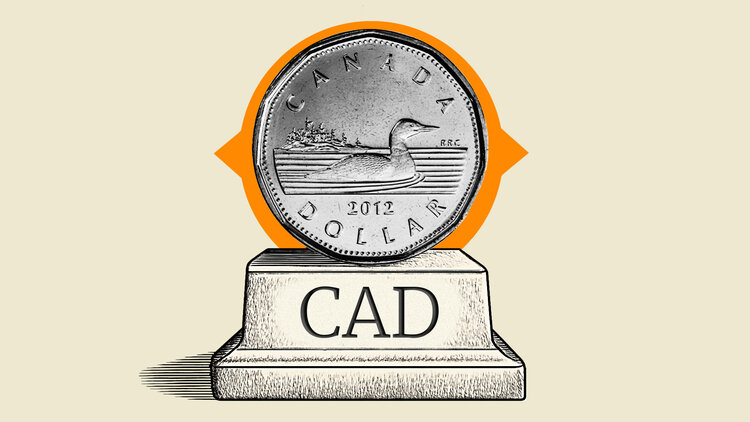
The Canadian Dollar (CAD) strengthens for a fourth straight day on Tuesday, pushing USD/CAD below 1.4050 and leaving the pair nearly 1.8% below last week’s peaks. Supporting the CAD, Oil has climbed to its highest level since May, while fading expectations of immediate Federal Reserve (Fed) rate increases weigh on the US Dollar (USD).
Further support for the Canadian Dollar this week has come from the surge in Crude Oil. Although US President Donald Trump decided to waive sanctions on Russia, the move has not delivered the intended relief to Crude markets. Increasing attacks on vessels trying to pass through the Strait of Hormuz have instead intensified pressure on supplies from Gulf countries.
What has Iran announced about attacks on two vessels in Hormuz?
Two tankers were set ablaze by mines and stopped in the southern Strait of Hormuz, Iran’s Revolutionary Guards Navy told the local Tasnim News agency earlier on Tuesday.
In a recent hardening of its rhetoric towards the United States and Israel, the Islamic Republic has warned the allies against launching fresh attacks on Iran. It has also threatened to close the Strait of Hormuz completely and impose further blockades in the Strait of Bab el-Mandeb and the Suez Canal.
While tensions in the Middle East are dampening investors’ risk appetite, they continue to support the Canadian Dollar. Oil is Canada's leading export, and higher prices are significantly boosting the country’s foreign revenues.
By contrast, the US Dollar remains under pressure as markets adjust to the prospect of no Federal Reserve (Fed) interest rate increase next week. According to FedWatch Tool data, futures now imply a more than 80% probability that rates will remain unchanged at the October 28-29 monetary policy meeting, compared with less than 50% one month earlier.
Canadian Dollar: frequently asked questions
Interest rates set by the Bank of Canada (BoC), Oil prices, economic conditions, inflation and the Trade Balance are among the main influences on the Canadian Dollar (CAD). Oil is Canada’s biggest export, while the Trade Balance measures the difference between the value of its exports and imports. Investor sentiment also matters: a willingness to hold riskier assets (risk-on) generally supports the CAD, whereas a preference for safe havens signals a risk-off environment. Since the US is Canada’s largest trading partner, the strength of the US economy is another important influence on the currency.
By determining the interest rate at which banks lend to each other, the Bank of Canada (BoC) exerts considerable influence over the Canadian Dollar and borrowing rates across the economy. Its primary objective is to keep inflation within 1-3%, raising or lowering interest rates as needed. Comparatively high rates generally support the CAD. The Bank of Canada can also alter credit conditions through quantitative easing or tightening; easing tends to weigh on the CAD, while tightening tends to strengthen it.
As petroleum is Canada’s largest export, changes in Oil prices are a major influence on the Canadian Dollar and often affect its value immediately. Rising Oil prices typically lift overall demand for the currency, strengthening the CAD, while falling prices tend to have the reverse effect. More expensive Oil also increases the likelihood of a positive Trade Balance, providing further support to the Canadian Dollar.
Inflation was traditionally viewed as harmful to a currency because it erodes the value of money. With cross-border capital controls becoming less restrictive in modern times, however, the effect has actually been the reverse. Central banks tend to respond to higher inflation by raising interest rates, drawing capital from international investors looking for attractive returns. Those inflows boost demand for the domestic currency, which in Canada is the Canadian Dollar.
By indicating the state of the economy, macroeconomic releases can influence the Canadian Dollar. GDP, Manufacturing and Services PMIs, employment figures and consumer sentiment surveys are all capable of shaping the CAD’s direction. Economic strength supports the currency by attracting greater foreign investment and may also prompt the Bank of Canada to raise interest rates, strengthening it further. Weak economic readings, on the other hand, are likely to weigh on the CAD.
POPULAR ARTICLES
1Ripple Price Forecast: XRP Drops Below $1.30 as Selling Pressure Intensifies2Hungarian Forint: How are crowded positions clouding the fiscal outlook? - ING3USD/CHF Price Forecast: Can key support at 0.8225 hold after rejection at 0.8270?4Gold Losses Deepen as Higher Oil Prices Bolster Fed Rate Hike Bets5US Dollar: Could equity weakness deepen losses? - TD Securities6Canadian Dollar: How are October hike bets driving gains against the US Dollar? - MUFG7High Oil prices and a softer US Dollar lift Canadian Dollar to new monthly highs8Crypto Today: Bitcoin, Ethereum, XRP edge lower as ETF flows remain mixed9Iran’s continuing attacks on oil tankers push WTI to a fresh monthly high near $100.50
LIVE QUOTES

ALL ABOUT OIL
5 Best Oil Trading Platforms 2026 (Brent and WTI)
Iran War and the Global Economy in 2026: Oil, Inflation, Trade and Markets
Should You Still Invest in Oil in 2026?
WTI vs Brent Crude
Gold to Oil Ratio: How does the Iran War affect Gold Prices?
Top 10 Most Traded Commodities in India & The Best Commodity to Trade
What is WTI Oil: Importance, Purpose, How To Trade
Trading Brent Crude Oil: A Comprehensive Guide
How to Trade Oil in India: Steps, Markets and Risks
Get Started!
Sign up and access the Global Markets in less than 3 minutes

Connect With Us









Contacts
Phone: +61 2 8036 8388
Fax: +61 2 8036 8388
Email: support@tmgm.com



The information provided on this website is of a general nature only and does not constitute personal financial advice. Before acting on any information on this website, you should consider the suitability of the information in relation to your objectives, financial situation and needs. Investing in CFDs and FX Margin Contracts carries significant risks and is not suitable for all investors. You may lose more than your initial deposit. You do not own, or have, any interest in the underlying asset. We recommend that you seek independent advice and ensure you fully understand the risks involved before trading. It is important that you read and consider the disclosure document before you acquire any product listed on the website. The information and advertisements offered on this website are not intended for use by any person in any country or jurisdiction where such use would be contrary to local laws and regulations. The Products and Services offered on this website are not intended for residents of the United States, Malaysia and Thailand.
TMGM is authorized and regulated in various jurisdictions.
Trademax Australia Limited, trading as TMGM, is regulated by the Australian Securities and Investments Commission (ASIC), AFSL no. 436416 and is located at Level 28, One International Tower, 100 Barangaroo Avenue, 2000 Sydney, NSW Australia.
Email: support@tmgm.com.au
Trademax Global Limited, trading as TMGM, is authorized and regulated by the Vanuatu Financial Services Commission (VFSC), registration number 40356 and registered at 1276, Kumul Highway, Port Vila, Vanuatu, Republic of Vanuatu.
Email: support@tmgm.com
Trademax Global Markets (SE) Limited, trading as TMGM, is authorized and regulated by the Financial Services Authority (FSA) of Seychelles, with license number SD224. The company is registered at Office No 13, Providence Estate ABIS Centre, Mahe, Seychelles.
Email: support@tmgm.com
Trademax Global Markets (International) Pty Ltd, trading as TMGM, is authorized and regulated by the Financial Services Commission, Mauritius (FSC) with license no. GB22201012, and registered at 33, Edith Cavell Street C/o IQ EQ Fund Services (Mauritius) Ltd Port Louis, 11324 Mauritius.
Email: support@tmgm.com
Copyright © TMGM. All rights reserved