

Trading
Explore a wide range of markets with competitive pricing, deep liquidity, and advanced trading tools.
Learn More 
Platform
Trade seamlessly with TMGM's powerful platform, built for speed, precision, and a superior trading experience.
Learn More Trading Platform
Academy
Learn the fundamentals of trading with beginner-friendly resources, including guides, webinars, and market insights.
Learn More News & Analysis
Get real-time market updates and expert analysis to stay ahead of trading opportunities
Learn More News & Analysis
About
Learn what sets TMGM apart — our global presence, regulatory strength, and commitment to innovation in trading.
Learn More Why Choose TMGM
Sponsorship
US Dollar remains supported by Fed policy outlook and geopolitical tensions, experts agree
- Buying interest lifts the US Dollar Index above 102.00 to new two-week highs, following a 0.6% gain over three days.
- Demand for the US Dollar revives as investors prepare for the Fed to leave rates unchanged with a hawkish stance on Wednesday.
- The safe-haven USD draws further support as expectations of an immediate US-Iran peace agreement fade.
Strong demand has placed the US Dollar among the best-performing major currencies in recent sessions, as investors await next Wednesday’s Federal Open Market Committee (FOMC) decision. Tracking the US Dollar (USD) against a basket of six other currencies, the US Dollar Index (DXY) has advanced more than 0.6% across the last three trading days, reaching two-week highs above 102.00.
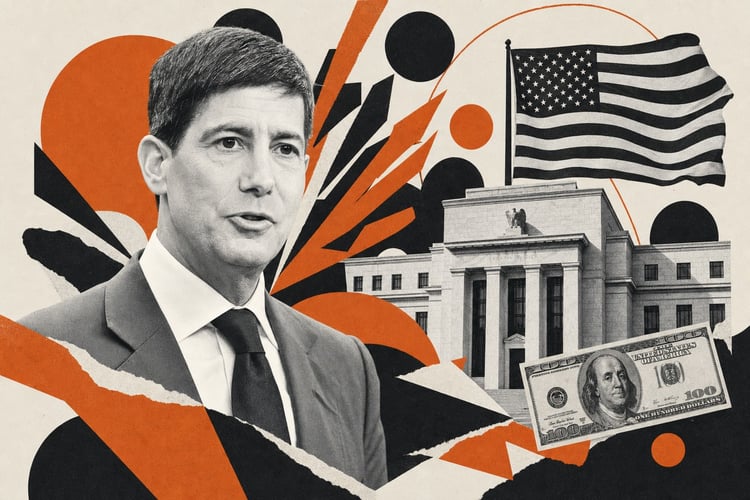
With markets preparing for a hawkish pause by the Federal Reserve (Fed), traders have taken long positions in the US Dollar this week. Such an outcome would confirm expectations of a quarter-point rate increase in December. Meanwhile, the latest effort to ease Middle East tensions has, like earlier attempts, produced no result. Continuing clashes between regional powers and attacks in the Strait of Hormuz are also underpinning the USD’s appeal as a safe haven.
Can Dollar Support Strengthen Before the Key Fed Decision?
ING’s Chris Turner sees support for the dollar on pullbacks, noting that with “energy prices firm and expectations growing that the US and Israel will launch another attack on Iran (...) we expect central banks to stay hawkish. This should keep the dollar supported on dips.”
HSBC analysts share a similar view, saying they "expect the USD to consolidate near its recent highs over the coming weeks, with risks tilted towards further gains rather than material weakness."
Nevertheless, HSBC maintains a more neutral outlook for the USD. Its experts argue that "US economic resilience, a hawkish Federal Reserve and potential challenges for other currencies should limit the USD’s downside, without necessarily providing the momentum for another leg higher."
Persistent inflation risks also lead TD Securities to anticipate a cautious stance from the FOMC following Wednesday’s meeting. The TD Securities expert puts it this way: “A hold in October will make a December hike all the more likely,”
Why Are Eurozone Credit Strains Supporting USD Demand?
Brown Brothers Harriman strategists highlight the findings of the ECB’s October survey, which “showed a further net tightening of credit standards and weaker loan demand in Q3,”. They say this combination “is a headwind to Eurozone economic activity and challenges the nearly 75bps of ECB hikes priced by markets over the next twelve months.”
For the US, BBH expects the upcoming data to demonstrate continued economic strength, saying “September durable goods orders and ADP weekly employment change will likely underscore the resilience of the economy,”. The firm also notes that “rising gasoline prices point to worsening near-term inflation expectations in October’s consumer confidence survey.” Taken together, these factors strengthen the argument for the Fed to maintain a firm monetary policy stance.
US Dollar: Frequently Asked Questions
Alongside being the official currency of the United States of America, the US Dollar (USD) serves as the ‘de facto’ currency in a significant number of other countries, circulating together with local banknotes. No other currency is traded more widely: according to 2022 data, it accounts for over 88% of global foreign exchange turnover, equivalent to average daily transactions of $6.6 trillion. The USD replaced the British Pound as the world’s reserve currency after the Second World War. Gold backed the US Dollar for most of its history, until the Gold Standard ended with the Bretton Woods Agreement in 1971.
Monetary policy, determined by the Federal Reserve (Fed), is the single biggest influence on the US Dollar’s value. The Fed’s twin mandates are price stability, which involves controlling inflation, and full employment. Adjusting interest rates is its main means of pursuing these objectives. If prices climb too rapidly and inflation exceeds the Fed’s 2% target, the central bank raises rates, helping to support the USD. Conversely, inflation below 2% or an excessively high Unemployment Rate may prompt the Fed to cut interest rates, putting pressure on the Greenback.
When conditions become extreme, the Federal Reserve may print additional Dollars and introduce quantitative easing (QE). Through QE, the Fed sharply expands the supply of credit in a financial system that is no longer functioning effectively. This unconventional policy is used when credit dries up as banks refuse to lend to one another for fear that counterparties will default. It serves as a last resort when interest rate cuts alone are unlikely to deliver the required outcome. During the Great Financial Crisis in 2008, QE was the Fed’s preferred response to the credit crunch. Under this approach, the central bank prints more Dollars to purchase US government bonds, mainly from financial institutions. The usual effect of QE is a weaker US Dollar.
By reversing quantitative easing, quantitative tightening (QT) typically supports the US Dollar. Under QT, the Federal Reserve ceases bond purchases from financial institutions and does not use the principal repaid on its maturing bond holdings to make new purchases.
POPULAR ARTICLES
1Brazilian Real: Why is Brazil’s election shock keeping volatility elevated? – MUFG2Can the Japanese Yen Regain Ground as Traders Await Fed and BoJ Monetary Policy Decisions?3Mexican Peso: Is Downside Against US Dollar Likely to Be Limited? – Commerzbank4British Pound: UOB Expects Range-Bound Trading Against US Dollar5Bank of Canada: Rate hike case strengthened by higher oil prices – NBC6US Dollar remains supported by Fed policy outlook and geopolitical tensions, experts agree7Federal Reserve: What Are the Expectations for a December Rate Hike? – BNY8Brazilian Real: How Will Politics Shape Its Post-Ambush Course? – Societe Generale9Is the Japanese Yen gaining appeal as a hedge against the US Dollar? - OCBC
LIVE QUOTES

ALL ABOUT FOREX
What Is a Stop Loss, How Does It Work and How Do You Set One?
Margin Call Meaning: What It Is, What Triggers It, and How to Avoid One
What Is an Islamic Account in Forex?
Best Indicators for Forex Trading and How to Use Them
The Top 10 Most Traded Currency Pairs in the World
What are the Major Forex Pairs? 7 Major Currency Pairs in the World
5 Best Forex Trading Apps In India In 2026
Top 15 Weakest Currencies in the World
Best Time to Trade Forex
Get Started!
Sign up and access the Global Markets in less than 3 minutes

Connect With Us









Contacts
Phone: +61 2 8036 8388
Fax: +61 2 8036 8388
Email: support@tmgm.com



The information provided on this website is of a general nature only and does not constitute personal financial advice. Before acting on any information on this website, you should consider the suitability of the information in relation to your objectives, financial situation and needs. Investing in CFDs and FX Margin Contracts carries significant risks and is not suitable for all investors. You may lose more than your initial deposit. You do not own, or have, any interest in the underlying asset. We recommend that you seek independent advice and ensure you fully understand the risks involved before trading. It is important that you read and consider the disclosure document before you acquire any product listed on the website. The information and advertisements offered on this website are not intended for use by any person in any country or jurisdiction where such use would be contrary to local laws and regulations. The Products and Services offered on this website are not intended for residents of the United States, Malaysia and Thailand.
TMGM is authorized and regulated in various jurisdictions.
Trademax Australia Limited, trading as TMGM, is regulated by the Australian Securities and Investments Commission (ASIC), AFSL no. 436416 and is located at Level 28, One International Tower, 100 Barangaroo Avenue, 2000 Sydney, NSW Australia.
Email: support@tmgm.com.au
Trademax Global Limited, trading as TMGM, is authorized and regulated by the Vanuatu Financial Services Commission (VFSC), registration number 40356 and registered at 1276, Kumul Highway, Port Vila, Vanuatu, Republic of Vanuatu.
Email: support@tmgm.com
Trademax Global Markets (SE) Limited, trading as TMGM, is authorized and regulated by the Financial Services Authority (FSA) of Seychelles, with license number SD224. The company is registered at Office No 13, Providence Estate ABIS Centre, Mahe, Seychelles.
Email: support@tmgm.com
Trademax Global Markets (International) Pty Ltd, trading as TMGM, is authorized and regulated by the Financial Services Commission, Mauritius (FSC) with license no. GB22201012, and registered at 33, Edith Cavell Street C/o IQ EQ Fund Services (Mauritius) Ltd Port Louis, 11324 Mauritius.
Email: support@tmgm.com
Copyright © TMGM. All rights reserved