

Trading
Explore a wide range of markets with competitive pricing, deep liquidity, and advanced trading tools.
Learn More 
Platform
Trade seamlessly with TMGM's powerful platform, built for speed, precision, and a superior trading experience.
Learn More Trading Platform
Academy
Learn the fundamentals of trading with beginner-friendly resources, including guides, webinars, and market insights.
Learn More News & Analysis
Get real-time market updates and expert analysis to stay ahead of trading opportunities
Learn More News & Analysis
About
Learn what sets TMGM apart — our global presence, regulatory strength, and commitment to innovation in trading.
Learn More Why Choose TMGM
Sponsorship
Why did the US Dollar remain flat despite the Federal Reserve holding rates and two officials voting for a hike?
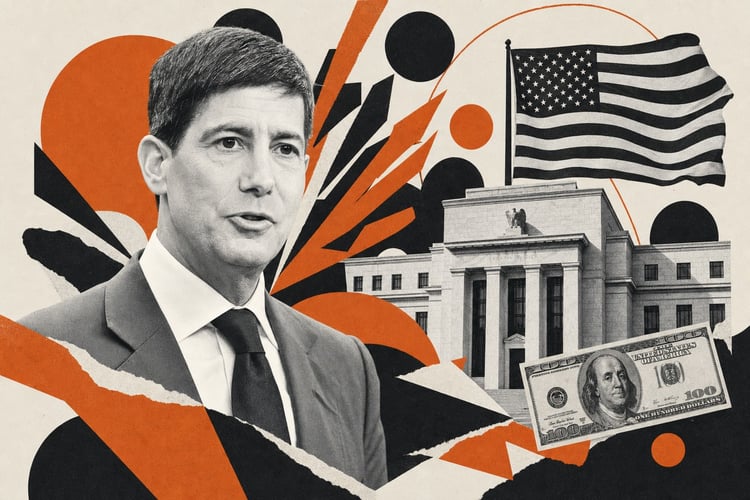
The US Dollar (USD) has struggled to extend its recent rally following the Federal Reserve’s decision to leave interest rates unchanged, keeping the currency in consolidation as investors turn to key economic releases. Although two dissenters voted for an immediate rate increase and economic activity remained strong, Fed Chair Kevin Warsh’s caution over the timing of further hikes held back the Greenback. Ahead of September’s US Personal Consumption Expenditures (PCE) inflation release and Q3 Gross Domestic Product (GDP) figures, strategists at DBS Group Research and Commerzbank are assessing whether solid growth combined with softer underlying inflation could undermine longer-term rate-hike expectations, or whether policy tightening in December remains firmly on course.
Can the US Dollar rally withstand yield divergence and softer underlying inflation? DBS weighs in
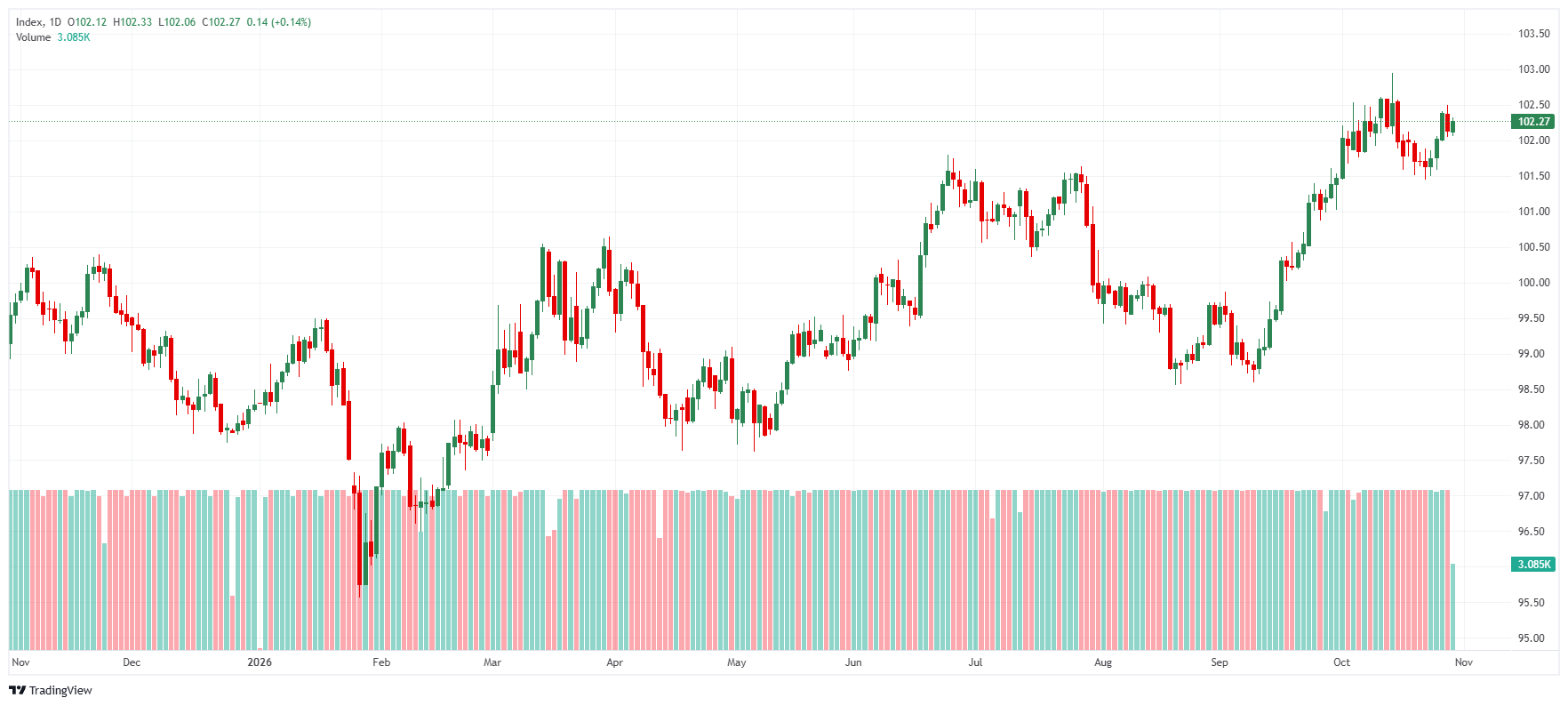
The contrast between a weaker Greenback and elevated Treasury yields suggests that the Federal Reserve’s hawkish pause failed to support further US Dollar gains, according to Philip Wee at DBS Group Research. Chairman Kevin Warsh’s unwillingness to confirm a December rate increase puts the focus squarely on the forthcoming PCE inflation and Q3 GDP releases. In Wee’s assessment, markets could trim their expectations for multiple Fed hikes in 2027 if growth stays resilient while underlying inflation moderates.
"The Fed’s hawkish hold was not enough to sustain the USD’s rally. The divergence between a softer DXY and higher US Treasury yields was particularly noteworthy... Fed Chairman Kevin Warsh’s refusal to affirm a December hike leaves markets reliant on today’s PCE inflation and 3Q26 GDP reports for guidance... September’s headline PCE inflation is expected to increase to 3.6% YoY (0.5% MoM)... Advance estimate for 3Q26 GDP growth is expected to accelerate to an annualised 3.2% QoQ saar... A combination of resilient growth and easing underlying inflation should prompt a reassessment of the multiple 2027 Fed hikes projected by markets."
Why has the USD barely moved despite 85% odds of a December Fed hike? Commerzbank assesses
With markets still assigning an 85% probability to a December rate increase, the US Dollar barely reacted to the Fed’s decision to keep rates unchanged, notes Michael Pfister at Commerzbank. That muted response came despite two dissenting votes in favour of a hike. Robust growth and labour market data continue to underpin the case for further tightening. Pfister nevertheless points to structural changes to FOMC meetings from 2027, which will shift foreign exchange volatility further towards economic releases and away from central bank announcements.
"As expected, yesterday’s Federal Reserve meeting did not result in any change to interest rates. However, two votes were cast in favour of a rate hike, including one from Lisa Cook... For the US dollar, therefore, the whole affair was a non-event: there was virtually no movement, and the market continues to price in an interest rate rise of roughly 85% for the December meeting... The meeting became particularly interesting at the outset when Warsh announced that, whilst they intend to stick to eight meetings a year, from 2027 onwards, one of these will be a strategy meeting without an interest rate decision or statement."
What Could Shape the Dollar’s Next Move?
Little movement in the US Dollar after the Federal Reserve’s rate pause reflects a foreign exchange market balancing near-term expectations of tighter policy against a longer-term reassessment of the economic outlook. According to Commerzbank, an 85% probability of a December hike remains an anchor for near-term Greenback valuations. By contrast, DBS Group Research argues that if Q3 GDP (3.2% QoQ annualised) confirms robust expansion while core inflation eases, investors may have to reduce their expectations for Fed rate increases in 2027, temporarily limiting further US Dollar gains.
(This article was created with the help of an Artificial Intelligence tool and reviewed by an editor. Know more.)
POPULAR ARTICLES
1Natural gas: Prices surge on supply risks – ING2Crypto Today: Why are Bitcoin, Ethereum, XRP falling as a hawkish Fed tone dampens sentiment?3Following mixed US data, Japanese Yen edges higher from session lows4Could ECB guidance keep the Euro range-bound against the US Dollar? – DBS5$52.34: Amid hopes of further Fed tightening, silver falls to new yearly lows6British Pound: Does the short-term downside bias put 1.3265 against US Dollar in focus? – UOB7Canadian Dollar: Do oil risks strengthen the case for a further BoC hike? – Commerzbank8Last week’s US Initial Jobless Claims fell to 194K9United States economy beats third-quarter growth expectations, expanding 3.4% against a 3.2% forecast


Get Started!
Sign up and access the Global Markets in less than 3 minutes

Connect With Us









Contacts
Phone: +61 2 8036 8388
Fax: +61 2 8036 8388
Email: support@tmgm.com



The information provided on this website is of a general nature only and does not constitute personal financial advice. Before acting on any information on this website, you should consider the suitability of the information in relation to your objectives, financial situation and needs. Investing in CFDs and FX Margin Contracts carries significant risks and is not suitable for all investors. You may lose more than your initial deposit. You do not own, or have, any interest in the underlying asset. We recommend that you seek independent advice and ensure you fully understand the risks involved before trading. It is important that you read and consider the disclosure document before you acquire any product listed on the website. The information and advertisements offered on this website are not intended for use by any person in any country or jurisdiction where such use would be contrary to local laws and regulations. The Products and Services offered on this website are not intended for residents of the United States, Malaysia and Thailand.
TMGM is authorized and regulated in various jurisdictions.
Trademax Australia Limited, trading as TMGM, is regulated by the Australian Securities and Investments Commission (ASIC), AFSL no. 436416 and is located at Level 28, One International Tower, 100 Barangaroo Avenue, 2000 Sydney, NSW Australia.
Email: support@tmgm.com.au
Trademax Global Limited, trading as TMGM, is authorized and regulated by the Vanuatu Financial Services Commission (VFSC), registration number 40356 and registered at 1276, Kumul Highway, Port Vila, Vanuatu, Republic of Vanuatu.
Email: support@tmgm.com
Trademax Global Markets (SE) Limited, trading as TMGM, is authorized and regulated by the Financial Services Authority (FSA) of Seychelles, with license number SD224. The company is registered at Office No 13, Providence Estate ABIS Centre, Mahe, Seychelles.
Email: support@tmgm.com
Trademax Global Markets (International) Pty Ltd, trading as TMGM, is authorized and regulated by the Financial Services Commission, Mauritius (FSC) with license no. GB22201012, and registered at 33, Edith Cavell Street C/o IQ EQ Fund Services (Mauritius) Ltd Port Louis, 11324 Mauritius.
Email: support@tmgm.com
Copyright © TMGM. All rights reserved