

Trading
Explore a wide range of markets with competitive pricing, deep liquidity, and advanced trading tools.
Learn More 
Platform
Trade seamlessly with TMGM's powerful platform, built for speed, precision, and a superior trading experience.
Learn More Trading Platform
Academy
Learn the fundamentals of trading with beginner-friendly resources, including guides, webinars, and market insights.
Learn More News & Analysis
Get real-time market updates and expert analysis to stay ahead of trading opportunities
Learn More News & Analysis
About
Learn what sets TMGM apart — our global presence, regulatory strength, and commitment to innovation in trading.
Learn More Why Choose TMGM
Sponsorship
New Iran strikes unlikely if talks advance, says US President Donald Trump
Further US strikes on Iran are “highly unlikely” if talks on its nuclear programme and the reopening of the Strait of Hormuz make progress, US President Donald Trump said, according to a CNN report on Sunday.
Trump made any further action conditional on an agreement, saying: “It depends on whether or not they sign a very strong agreement,” and adding: “The answer is highly unlikely it will be necessary.” He also said: “I would if necessary, but we hit them really hard,”
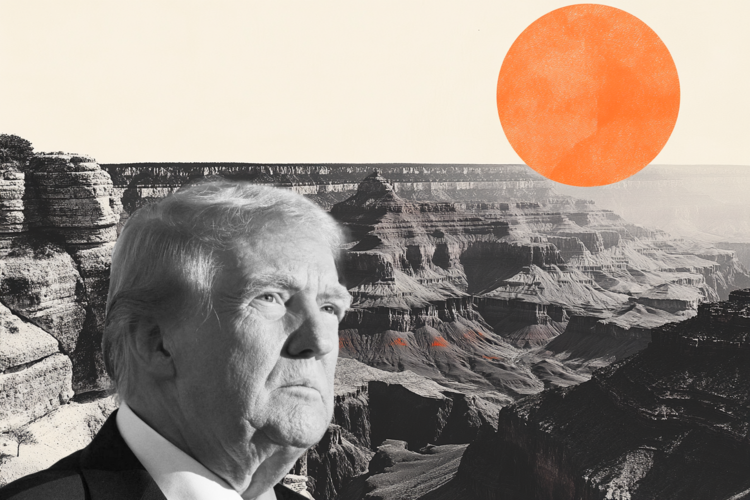
Following last week's US midterm elections, diplomacy returned to the spotlight. Qatar, the chief mediator between the US and Iran, said Iran was considering proposals relating to its nuclear programme.
That assessment contrasted with remarks on Sunday from Iranian Foreign Minister Abbas Araghchi, who said mediators had neither made progress nor taken any action in the days since the US elections.
Separately, an attack by the Iranian-backed Houthis in Yemen damaged a landmark in the Saudi Arabian capital's financial district. The offices of oil giant Saudi Aramco also sustained minor damage on Sunday as the city defended itself against a fresh barrage of ballistic and cruise missiles.
How does risk sentiment affect markets?
Investors' willingness to take on risk at a given time is commonly described in financial markets using the terms “risk-on” and “risk-off”. Optimism about the outlook encourages investors to buy riskier assets in a “risk-on” environment. By contrast, concern about the future prompts a more cautious approach in a “risk-off” market. Investors then favour lower-risk assets that offer greater certainty of returns, even if those returns are relatively modest.
A favourable growth outlook typically supports equities and most commodities, apart from Gold, during “risk-on” periods. Stronger demand also lifts the currencies of major commodity-exporting countries, while cryptocurrencies advance. When markets turn “risk-off”, bonds, particularly major government bonds, tend to gain. Gold also benefits, alongside safe-haven currencies including the Japanese Yen, Swiss Franc and US Dollar.
A “risk-on” environment generally supports the Australian Dollar (AUD), Canadian Dollar (CAD) and New Zealand Dollar (NZD), as well as less widely traded currencies such as the Ruble (RUB) and South African Rand (ZAR). Growth in these economies depends heavily on commodity exports. As investors anticipate stronger economic activity and greater future demand for raw materials, commodity prices tend to increase, supporting these currencies.
During “risk-off” periods, the US Dollar (USD), Japanese Yen (JPY) and Swiss Franc (CHF) are the major currencies that generally strengthen. The US Dollar benefits from its role as the world's reserve currency and from crisis-driven demand for US government debt. Investors regard this debt as safe because the world's largest economy is considered unlikely to default. Demand for Japanese government bonds supports the Yen: a large share of these bonds is held by domestic investors, who are unlikely to sell them even during a crisis. The Swiss Franc draws support from Switzerland's strict banking laws, which provide investors with greater capital protection.
POPULAR ARTICLES
1New Iran strikes unlikely if talks advance, says US President Donald Trump2Taiwan Dollar: What Do CBC Intervention and Inflation Risks Mean? – Commerzbank3Silver Price Forecast: Can $49.00 support hold amid a Doji standoff?4Japan CFTC JPY NC Net Positions rose from previous ¥101.6K to ¥102.3K5United States CFTC Oil NC Net Positions up to 80.3K from previous 74.3K6Eurozone CFTC EUR NC Net Positions fell from previous €-143.9K to €-157.8K7United States CFTC S&P 500 NC Net Positions up to $-129.4K from previous $-134.4K8United States CFTC Gold NC Net Positions down to $179.5K from previous $186.5K9Australia CFTC AUD NC Net Positions: $-129.5K vs previous $-128.3K


Get Started!
Sign up and access the Global Markets in less than 3 minutes

Connect With Us









Contacts
Phone: +61 2 8036 8388
Fax: +61 2 8036 8388
Email: support@tmgm.com



The information provided on this website is of a general nature only and does not constitute personal financial advice. Before acting on any information on this website, you should consider the suitability of the information in relation to your objectives, financial situation and needs. Investing in CFDs and FX Margin Contracts carries significant risks and is not suitable for all investors. You may lose more than your initial deposit. You do not own, or have, any interest in the underlying asset. We recommend that you seek independent advice and ensure you fully understand the risks involved before trading. It is important that you read and consider the disclosure document before you acquire any product listed on the website. The information and advertisements offered on this website are not intended for use by any person in any country or jurisdiction where such use would be contrary to local laws and regulations. The Products and Services offered on this website are not intended for residents of the United States, Malaysia and Thailand.
TMGM is authorized and regulated in various jurisdictions.
Trademax Australia Limited, trading as TMGM, is regulated by the Australian Securities and Investments Commission (ASIC), AFSL no. 436416 and is located at Level 28, One International Tower, 100 Barangaroo Avenue, 2000 Sydney, NSW Australia.
Email: support@tmgm.com.au
Trademax Global Limited, trading as TMGM, is authorized and regulated by the Vanuatu Financial Services Commission (VFSC), registration number 40356 and registered at 1276, Kumul Highway, Port Vila, Vanuatu, Republic of Vanuatu.
Email: support@tmgm.com
Trademax Global Markets (SE) Limited, trading as TMGM, is authorized and regulated by the Financial Services Authority (FSA) of Seychelles, with license number SD224. The company is registered at Office No 13, Providence Estate ABIS Centre, Mahe, Seychelles.
Email: support@tmgm.com
Trademax Global Markets (International) Pty Ltd, trading as TMGM, is authorized and regulated by the Financial Services Commission, Mauritius (FSC) with license no. GB22201012, and registered at 33, Edith Cavell Street C/o IQ EQ Fund Services (Mauritius) Ltd Port Louis, 11324 Mauritius.
Email: support@tmgm.com
Copyright © TMGM. All rights reserved