

Trading
Explore a wide range of markets with competitive pricing, deep liquidity, and advanced trading tools.
Learn More 
Platform
Trade seamlessly with TMGM's powerful platform, built for speed, precision, and a superior trading experience.
Learn More Trading Platform
Academy
Learn the fundamentals of trading with beginner-friendly resources, including guides, webinars, and market insights.
Learn More News & Analysis
Get real-time market updates and expert analysis to stay ahead of trading opportunities
Learn More News & Analysis
About
Learn what sets TMGM apart — our global presence, regulatory strength, and commitment to innovation in trading.
Learn More Why Choose TMGM
Sponsorship
US readies fresh tariffs targeting China and other trading partners – WSJ
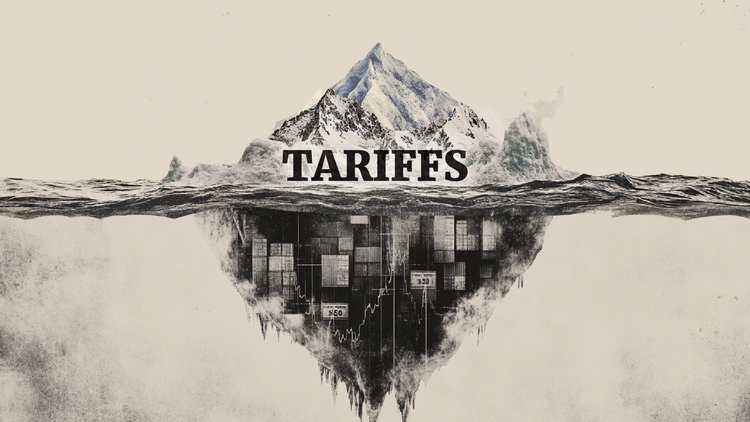
China and other trading partners face the prospect of higher US tariffs as the Trump administration prepares to act over claims that their support for domestic industrial production is hurting American companies. The Wall Street Journal reported the plans on Tuesday, citing people familiar with them.
Findings from a months-long investigation into China, the European Union and 14 other countries could be published by US Trade Representative Jamieson Greer as early as this week, although the schedule remains subject to change. According to Greer, government subsidies have generated excess industrial capacity, enabling producers in those economies to undercut US manufacturers by selling cheaper goods overseas.
How are markets responding?
The report has put US stock futures under pressure, with Nasdaq 100 futures down 2.38% and Dow futures lower by around 1%. Earlier gains in S&P 500 futures have narrowed.
Nasdaq: Common Questions Answered
Before becoming a US stock exchange, the Nasdaq began as an electronic system for stock quotations. Its initial role was limited to providing prices for over-the-counter (OTC) stocks; it subsequently became an exchange as well. By 1991, its share of the overall US securities market had reached 46%. In 1998, the Nasdaq became the first US stock exchange to offer online trading. It also compiles several indices, including the Nasdaq 100 and its broadest measure, the Nasdaq Composite, which represents all 2,500-plus stocks listed on the Nasdaq.
Comprising 100 non-financial companies listed on the Nasdaq stock exchange, the Nasdaq 100 is a large-cap index. It represents only a small portion of the exchange’s thousands of stocks, yet accounts for over 90% of the movement. Each constituent’s influence is weighted by its market capitalisation. Technology-focused businesses feature prominently, alongside companies from other sectors and those based outside the US. Since 1986, the Nasdaq 100 has delivered an average annual return of 17.23%.
Traders can access the Nasdaq 100 through several instruments. Bets through Contracts for Difference (CFD) are available from most retail brokers and spread betting platforms. For investors with a longer-term horizon, Exchange-Traded Funds (ETFs) offer share-like trading while tracking the index, without requiring the purchase of shares in all 100 constituent companies. The Invesco QQQ Trust (QQQ) is one such ETF. Traders seeking to speculate on the index’s future direction can use Nasdaq 100 futures contracts. Options, meanwhile, confer the right, but not the obligation, to buy or sell the Nasdaq 100 at a specified future price, known as the strike price.
The combined performance of its constituent companies, as reported in their quarterly and annual earnings, is the main driver of the Nasdaq 100, although several other factors also play a role. Economic data from the US and elsewhere affects investor sentiment, with a positive mood supporting gains. Interest rates set by the Federal Reserve (Fed) influence the index too, by determining borrowing costs for the many companies that depend heavily on credit. Inflation can therefore be a significant driver, alongside other indicators that shape the Fed’s decisions.
POPULAR ARTICLES
1US readies fresh tariffs targeting China and other trading partners – WSJ2Hungarian Forint: NBH Maintains Cautious Approach to Rate Cuts and FX – ING3Gold: Headwinds poised to diminish heading into 2027 – Commerzbank4BoE’s Greene says disinflation has come to a halt54-week average for US ADP Employment Change declines to 21K6Brent: 200‑DMA Break Followed by Downward Momentum – Societe Generale7Brazilian Real: How Do Debt Concerns Limit Rebound Potential? – BBH8Silver Price Forecast: Does weak momentum leave prices vulnerable to further declines?9Ripple Price Forecast: XRP retreats under ETF pressure


Get Started!
Sign up and access the Global Markets in less than 3 minutes

Connect With Us









Contacts
Phone: +61 2 8036 8388
Fax: +61 2 8036 8388
Email: support@tmgm.com



The information provided on this website is of a general nature only and does not constitute personal financial advice. Before acting on any information on this website, you should consider the suitability of the information in relation to your objectives, financial situation and needs. Investing in CFDs and FX Margin Contracts carries significant risks and is not suitable for all investors. You may lose more than your initial deposit. You do not own, or have, any interest in the underlying asset. We recommend that you seek independent advice and ensure you fully understand the risks involved before trading. It is important that you read and consider the disclosure document before you acquire any product listed on the website. The information and advertisements offered on this website are not intended for use by any person in any country or jurisdiction where such use would be contrary to local laws and regulations. The Products and Services offered on this website are not intended for residents of the United States, Malaysia and Thailand.
TMGM is authorized and regulated in various jurisdictions.
Trademax Australia Limited, trading as TMGM, is regulated by the Australian Securities and Investments Commission (ASIC), AFSL no. 436416 and is located at Level 28, One International Tower, 100 Barangaroo Avenue, 2000 Sydney, NSW Australia.
Email: support@tmgm.com.au
Trademax Global Limited, trading as TMGM, is authorized and regulated by the Vanuatu Financial Services Commission (VFSC), registration number 40356 and registered at 1276, Kumul Highway, Port Vila, Vanuatu, Republic of Vanuatu.
Email: support@tmgm.com
Trademax Global Markets (SE) Limited, trading as TMGM, is authorized and regulated by the Financial Services Authority (FSA) of Seychelles, with license number SD224. The company is registered at Office No 13, Providence Estate ABIS Centre, Mahe, Seychelles.
Email: support@tmgm.com
Trademax Global Markets (International) Pty Ltd, trading as TMGM, is authorized and regulated by the Financial Services Commission, Mauritius (FSC) with license no. GB22201012, and registered at 33, Edith Cavell Street C/o IQ EQ Fund Services (Mauritius) Ltd Port Louis, 11324 Mauritius.
Email: support@tmgm.com
Copyright © TMGM. All rights reserved