

Trading
Explore a wide range of markets with competitive pricing, deep liquidity, and advanced trading tools.
Learn More 
Platform
Trade seamlessly with TMGM's powerful platform, built for speed, precision, and a superior trading experience.
Learn More Trading Platform
Academy
Learn the fundamentals of trading with beginner-friendly resources, including guides, webinars, and market insights.
Learn More News & Analysis
Get real-time market updates and expert analysis to stay ahead of trading opportunities
Learn More News & Analysis
About
Learn what sets TMGM apart — our global presence, regulatory strength, and commitment to innovation in trading.
Learn More Why Choose TMGM
Sponsorship
Canadian Dollar Sees Little Change as Fed Holds Rates After BoC Hike
- USD/CAD fluctuates around 1.4050 after the BoC rate hike, with little reaction to the Fed's unchanged rates.
- Rates move from 2.25% to 2.50% as the BoC delivers its first increase since July 2023.
- Friday brings Canada's August GDP release, with Statistics Canada's estimate pointing to 0.2% growth.
USD/CAD is trading below 1.4050 after crossing that level in both directions within the five-minute bar following the Bank of Canada (BoC) announcement. Its subsequent decline on the Fed statement halted above the low recorded before either decision. Wednesday's BoC increase to 2.50%, alongside the Fed's decision to leave rates at 3.75%-4.00%, narrowed the Fed's rate advantage by a quarter-point in a single session.

With its first hike since July 2023, the BoC sought to prevent elevated energy prices from feeding through to other prices, leaving the Fed's rate advantage at 1.25-1.50 points. In its Monetary Policy Report (MPR), the BoC lifted its 2027 inflation projection from 2.0% to 3.1%, with a return to near 2% not expected until mid-2028. According to BoC Senior Deputy Governor Rogers, policymakers broadly agreed that inflation risks had increased.
The same report upgraded the 2026 growth projection from 0.7% to 1.0%, while BoC Governor Macklem said rates remained low enough not to constrain growth. Although the BoC indicated that another increase may be necessary, it said it would move cautiously. TD Economics anticipates one further hike to 2.75%, which would narrow the Fed's current rate advantage to 1.00-1.25 points.
Which upcoming releases could shape rate decisions?
The next decisions from both the Fed and the BoC are due on December 9, with forthcoming data feeding into their deliberations. On Friday at 12:30 GMT, Statistics Canada will release August Gross Domestic Product (GDP), following its advance estimate of a 0.2% increase. A day earlier, also at 12:30 GMT, US third-quarter growth figures and September's Personal Consumption Expenditures Price Index (PCE) are due.
Whether the Fed's rate advantage over the BoC widens again on December 9 will depend in part on Fed Chair Warsh's comments about December. His Wednesday press conference begins at 18:30 GMT, after the BoC's move. Speaking at the International Monetary Fund (IMF) meetings on October 16, he said other central banks shared his concerns about elevated inflation.
What does the chart indicate?
Since the BoC announcement, USD/CAD has remained in the lower half of Wednesday's trading range, which extends from just above 1.4000 to just below 1.4100. The session high came before the decline ahead of the BoC release. Intraday momentum, meanwhile, moved towards overbought territory heading into the Fed decision.
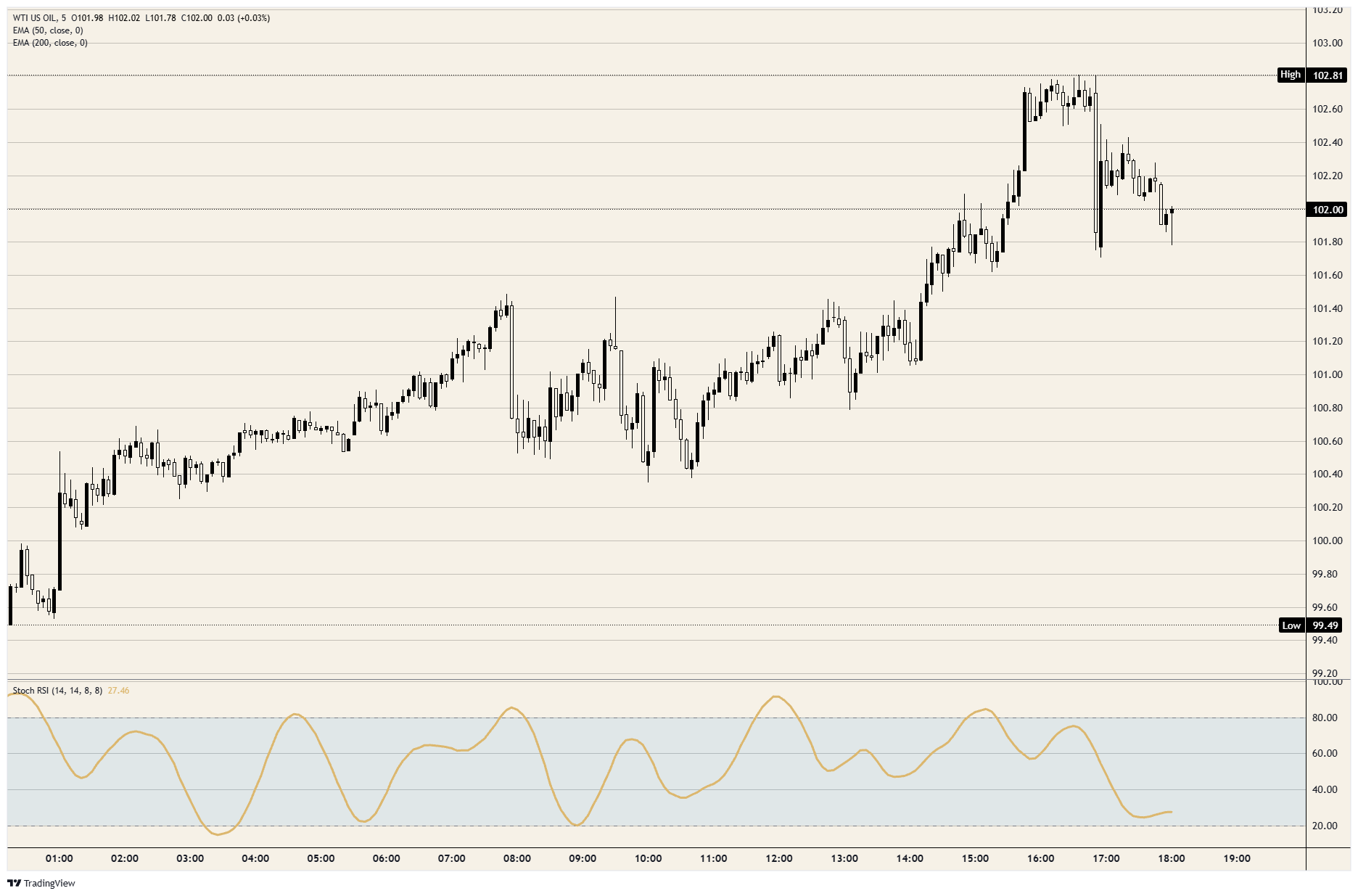
USD/CAD chart: 5-minute timeframe
Interest rates: frequently asked questions
For borrowers, interest rates determine the charges financial institutions levy on loans; for savers and depositors, they determine the interest paid on their money. These rates are influenced by base lending rates, which central banks set in response to economic developments. Maintaining price stability is normally part of a central bank's mandate, usually through a core inflation target of around 2%. When inflation drops below target, a central bank may reduce base lending rates to encourage lending and support economic activity. Conversely, inflation substantially above 2% normally prompts an increase in base lending rates as the central bank seeks to bring price rises under control.
A country's currency generally benefits from higher interest rates because they make the country a more attractive destination for global investors' funds.
Holding Gold rather than an interest-bearing asset or a bank deposit carries a greater opportunity cost when interest rates rise. Higher rates therefore generally put pressure on Gold prices. High interest rates also tend to strengthen the US Dollar (USD). As Gold is priced in Dollars, that strength has the effect of pushing Gold prices lower.
US banks lend to one another overnight at the Fed funds rate. This widely cited headline rate is set by the Federal Reserve during its FOMC meetings. Rather than a single figure, it is expressed as a range, such as 4.75%-5.00%, with the upper bound, 5.00% in this example, used as the quoted rate. The CME FedWatch tool tracks market expectations for the future Fed funds rate. Those expectations influence behaviour across many financial markets as participants anticipate forthcoming Federal Reserve monetary policy decisions.
POPULAR ARTICLES
1Fed pause reveals inflation divide as Australian Dollar holds its ground2Why is the Japanese Yen weakening as the Fed’s hold exposes a hawkish split?3British Pound regains ground as Fed keeps rates unchanged amid hawkish divisions4Crude Oil sees little change after Fed hold as Iran considers a Qatari deal5Canadian Dollar Sees Little Change as Fed Holds Rates After BoC Hike6Euro ticks higher as Fed stands pat, with ECB a day away7Dollar Index recovers from a dip as Fed holds rates, with two votes for a hike8WTI ends two-day run of losses as fresh developments unfold in the Middle East9Silver Price Forecast: Is $50 Back in Focus After Rejection at $55?
LIVE QUOTES

ALL ABOUT FOREX
What Is a Stop Loss, How Does It Work and How Do You Set One?
Margin Call Meaning: What It Is, What Triggers It, and How to Avoid One
What Is an Islamic Account in Forex?
Best Indicators for Forex Trading and How to Use Them
The Top 10 Most Traded Currency Pairs in the World
What are the Major Forex Pairs? 7 Major Currency Pairs in the World
5 Best Forex Trading Apps In India In 2026
Top 15 Weakest Currencies in the World
Best Time to Trade Forex
Get Started!
Sign up and access the Global Markets in less than 3 minutes

Connect With Us









Contacts
Phone: +61 2 8036 8388
Fax: +61 2 8036 8388
Email: support@tmgm.com



The information provided on this website is of a general nature only and does not constitute personal financial advice. Before acting on any information on this website, you should consider the suitability of the information in relation to your objectives, financial situation and needs. Investing in CFDs and FX Margin Contracts carries significant risks and is not suitable for all investors. You may lose more than your initial deposit. You do not own, or have, any interest in the underlying asset. We recommend that you seek independent advice and ensure you fully understand the risks involved before trading. It is important that you read and consider the disclosure document before you acquire any product listed on the website. The information and advertisements offered on this website are not intended for use by any person in any country or jurisdiction where such use would be contrary to local laws and regulations. The Products and Services offered on this website are not intended for residents of the United States, Malaysia and Thailand.
TMGM is authorized and regulated in various jurisdictions.
Trademax Australia Limited, trading as TMGM, is regulated by the Australian Securities and Investments Commission (ASIC), AFSL no. 436416 and is located at Level 28, One International Tower, 100 Barangaroo Avenue, 2000 Sydney, NSW Australia.
Email: support@tmgm.com.au
Trademax Global Limited, trading as TMGM, is authorized and regulated by the Vanuatu Financial Services Commission (VFSC), registration number 40356 and registered at 1276, Kumul Highway, Port Vila, Vanuatu, Republic of Vanuatu.
Email: support@tmgm.com
Trademax Global Markets (SE) Limited, trading as TMGM, is authorized and regulated by the Financial Services Authority (FSA) of Seychelles, with license number SD224. The company is registered at Office No 13, Providence Estate ABIS Centre, Mahe, Seychelles.
Email: support@tmgm.com
Trademax Global Markets (International) Pty Ltd, trading as TMGM, is authorized and regulated by the Financial Services Commission, Mauritius (FSC) with license no. GB22201012, and registered at 33, Edith Cavell Street C/o IQ EQ Fund Services (Mauritius) Ltd Port Louis, 11324 Mauritius.
Email: support@tmgm.com
Copyright © TMGM. All rights reserved